I remember a shoot in a damp basement in South Wales, twelve years ago. The light was coming from a single, flickering halogen work lamp we’d rigged to a shaky C-stand, and the air smelled like wet concrete and ozone. We were so focused on getting the perfect shadow fall across the subject’s face that nobody noticed the heavy lighting truss overhead was slowly migrating toward the lead actor’s head. Most people think a complete guide to risk assessments is just a pile of bureaucratic paperwork designed to keep the lawyers happy, but they’re wrong. It’s actually about that split second of situational awareness that keeps your crew from ending up in the hospital before you’ve even finished the first setup.
I’m not here to give you a template to copy-paste so you can check a box and get back to your coffee. Instead, I’m going to show you how to actually look at a room—not just the frame, but the floor, the ceiling, and the people standing in the shadows. This is a practical look at managing the gap between your creative vision and the physical reality of a working set. We’ll talk about what actually matters when the gear is heavy and the clock is ticking, and what you can ignore so you don’t waste time on nonsense.
The Invisible Frame a Complete Guide to Risk Assessments
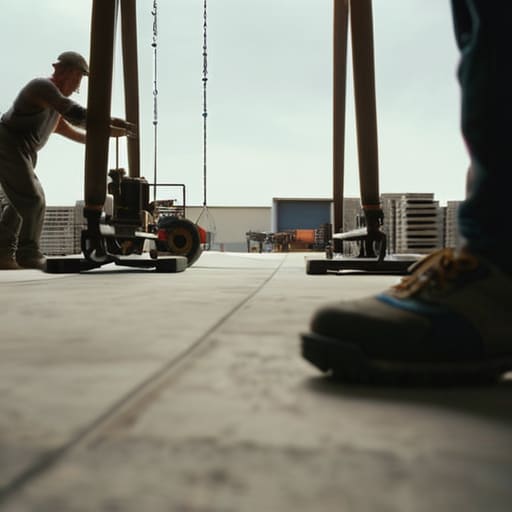
I’ve spent enough years on sets to know that a risk assessment isn’t just some bureaucratic hoop you jump through to satisfy an insurance broker. It’s actually about the space between your tripod and the edge of a loading dock, or whether that overhead light is actually secured or just hoping to stay put. When you start identifying workplace hazards, don’t just look for the obvious stuff like frayed cables. Look at the flow of the room. If your lighting technician has to dance around a moving dolly to reach a dimmer, you’ve already failed the first test of a decent setup.
The real work happens when you move past the checklist and start looking at a proper risk control measures strategy. You don’t need a PhD in safety management to understand that if a heavy piece of grip gear is positioned where a talent is likely to trip, the “likelihood and impact” are already too high to ignore. I don’t care how expensive your sensor is if the whole production shuts down because someone tripped over a sandbag that shouldn’t have been there in the first place. It’s about anticipating the chaos before the camera even rolls.
Identifying Workplace Hazards Before the Light Fails
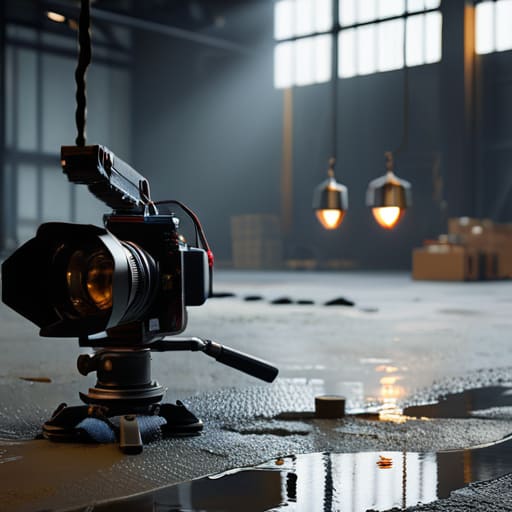
You don’t wait for a light to pop or a C-stand to tip before you start looking for trouble. Identifying workplace hazards is a lot like scouting a location for its practicals; you’re looking for the things that are going to interfere with the scene, whether that’s a loose cable in a high-traffic hallway or a heavy overhead rig positioned over a crowded craft services table. I’ve seen too many junior operators get so focused on the monitor that they miss the fact that the tripod legs are resting on an uneven, slick floor. You have to train your eyes to see the physical reality of the room, not just the composition in your viewfinder.
When you start applying a formal risk assessment methodology, don’t let it turn into a dry math exercise. Yes, you’ll eventually look at a likelihood and impact analysis to decide if a hazard is a minor nuisance or a production-killer, but that should happen after you’ve actually walked the floor. If you’re just staring at a spreadsheet in the production office, you aren’t doing your job. You need to be on-site, spotting the trip hazards and the electrical loads before the crew arrives and the pressure starts to mount.
Risk Assessment Methodology Measuring Distance and Danger
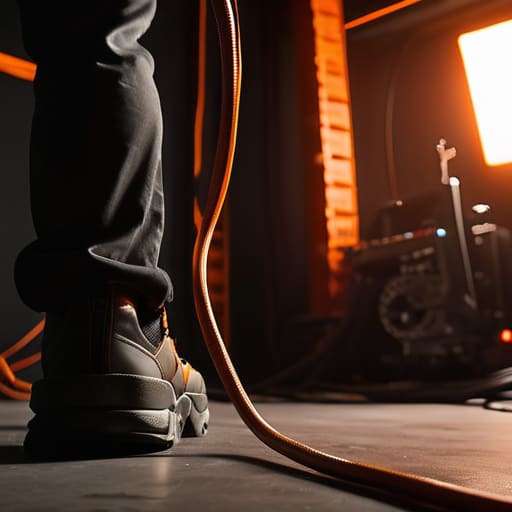
When you sit down to actually run a risk assessment methodology, don’t start with a spreadsheet. Start by walking the floor. I’ve seen enough sets where a production assistant is staring at a clipboard while a C-stand is wobbling dangerously close to a high-voltage cable. You need to look at the physics of the room, not just the checkboxes. A good assessment isn’t about finding every microscopic flaw; it’s about figuring out which mistakes will actually stop the shoot or, worse, put someone in the hospital.
I like to use a simplified version of a likelihood and impact analysis to keep things grounded. If a light stand falling is a high-impact event, even if the likelihood is low, you treat it like it’s happening tomorrow. You don’t need a complex safety management system to tell you that a heavy overhead rig needs a safety chain. You just need to look at the distance between your gear and your crew and decide if that gap is wide enough to breathe in. If the math doesn’t feel right in your gut, it isn’t right on the paper.
Likelihood and Impact Analysis Calculating the Cost of Error
When you’re looking at a risk assessment, you aren’t just filling out a spreadsheet; you’re trying to predict the moment where a plan meets a hard reality. This is where likelihood and impact analysis comes in. It sounds academic, but in practice, it’s just a way of asking: “How likely is this C-stand to tip, and if it does, does it hit a light or a person?” You have to weigh the probability of an event against the actual fallout. A frayed cable in a dark corner is a high-likelihood nuisance; a heavy overhead rig with a questionable mounting point is a high-impact catastrophe.
I’ve seen people get lost in complex risk matrix examples that look great in a binder but mean nothing when the sun is setting and the crew is tired. Don’t overcomplicate the math. You’re looking for the intersection of frequency and severity. If a hazard is easy to trigger and the result is a broken limb or a destroyed sensor, that’s your priority. You don’t need a PhD to see that; you just need to stop looking at the monitor for a second and actually look at the set.
Risk Matrix Examples for the Unpredictable Set
Look, I’ve seen enough sets go sideways to know that a theoretical grid on a piece of paper doesn’t mean much when a C-stand is wobbling near a talent’s head. When you’re looking at risk matrix examples, don’t just pick numbers out of a hat to satisfy a producer. A matrix is only useful if it reflects the actual chaos of a production. If you’re shooting in a cramped studio with a single power source, the “likelihood” of a trip hazard isn’t a two; it’s a five. You have to map the intersection of how often a mistake happens against how badly it’s going to hurt when it does.
I tend to view these matrices through the lens of likelihood and impact analysis, but with a practical eye. For instance, a minor lighting tweak that might cause a slight glare is a low-impact nuisance. But a heavy overhead rig improperly secured? That’s high impact, regardless of how “unlikely” the crew thinks it is. Your goal isn’t to create a perfect mathematical model; it’s to establish risk control measures that actually make sense when the sun is going down and everyone is tired.
Risk Control Measures and Robust Safety Management Systems
Once you’ve run your numbers through the risk matrix and realized that a heavy overhead light hanging by a single, frayed cable is a disaster waiting to happen, you don’t just sit there and stare at the math. That’s where risk control measures actually matter. It isn’t about finding a way to document the danger; it’s about physically changing the environment so the danger isn’t there. If the likelihood and impact analysis tells you a specific rigging setup is high-risk, you don’t “manage” it—you fix it. You add a second safety bond, you clear the floor of trip hazards, or you move the talent out of the splash zone.
Real safety management systems aren’t some thick binder gathering dust in a production office; they are the living, breathing protocols that keep a crew from getting hurt when things go sideways. A robust system means that when you’re identifying workplace hazards during a location scout, there is a clear, unshakeable chain of command for how those issues get resolved. It’s the difference between a set that runs like a professional operation and one that feels like a chaotic scramble. The goal is to build a buffer between your creative intent and the physics of the real world.
Five Ways to Keep the Paperwork from Killing the Production
- Stop treating the assessment like a legal chore and start treating it like a pre-light. If you aren’t looking at the actual floor space, the weight of the stands, and the path the actors take to get from point A to point B, you aren’t doing a risk assessment; you’re just filling out a form to satisfy an insurance agent.
- Watch the cables, not just the crew. You can have the most talented DP in the world, but if your cable management is a mess of trip hazards in a dark corner, your production is one stumble away from a lawsuit and a broken lens. Tape them down or route them, and do it before the first setup is even called.
- Respect the power draw. I’ve seen sets go sideways because someone thought they could daisy-chain three heavy-duty lights into a single domestic socket. A risk assessment isn’t just about physical trips and falls; it’s about knowing if your power distribution is going to blow a fuse—or a building—mid-take.
- Account for the “human element” of fatigue. A risk assessment written at 9:00 AM is useless by 11:00 PM. People get sloppy when they’re tired, when the light is fading, or when they’re rushing to catch the golden hour. Your safety plan needs to account for the fact that your crew won’t be as sharp in the twelfth hour as they were in the first.
- Don’t overcomplicate the math. You don’t need a PhD in statistics to realize that a heavy C-stand on an uneven cobblestone street is a high-risk setup. If the logic feels forced or buried in jargon, you’ve lost the point. Keep the assessment practical enough that a tired grip can actually read it and understand the danger in five seconds.
The Bottom Line on Keeping the Set Standing
A risk assessment isn’t a piece of paperwork to satisfy an insurance agent; it’s your mental rehearsal for when things actually go sideways. If you haven’t visualized the hazard in the context of your lighting setup or your cable runs, you haven’t actually done the assessment.
Stop looking for the perfect spreadsheet and start looking at the floor, the ceiling, and the people moving through your frame. Most accidents happen because someone was staring at a monitor or a light meter instead of noticing the tripod leg was on an uneven surface.
Mitigation isn’t about eliminating every possible variable—that’s impossible on a working set—it’s about making sure that when a variable changes, you have the control measures in place to prevent a catastrophe from ruining the shoot and the crew.
The Paperwork vs. The Reality
A risk assessment isn’t some bureaucratic chore to keep the lawyers happy; it’s the difference between a controlled set and a chaotic one. If you’re so busy checking boxes on a clipboard that you fail to notice the heavy light stand is wobbling on a loose floorboard, you haven’t actually assessed a damn thing.
Gethin Moreau
The Final Frame
At the end of the day, a risk assessment isn’t some bureaucratic hurdle designed to slow down your production; it’s the foundation that allows you to actually focus on the work. We’ve covered the methodology, from identifying the hazards lurking in the shadows of a cramped location to calculating the actual impact of a mistake when the sun is setting and the pressure is on. You need to understand the likelihood of failure, implement your controls, and maintain a system that survives the chaos of a real set. If you treat safety as an afterthought, you aren’t being “efficient”—you are simply gambling with the only thing that actually matters, which is the people standing behind your lens.
I’ve seen enough sets collapse into chaos because someone thought they were too experienced to bother with the basics. Real craft isn’t just about knowing which lens will give you the right compression or how to shape a key light; it’s about having the discipline to prepare for the worst so you can capture the best. When you walk onto a set knowing your environment is secure, you stop looking over your shoulder and start looking through the viewfinder. That’s where the magic happens. Do the work, respect the danger, and then go make something worth watching.
