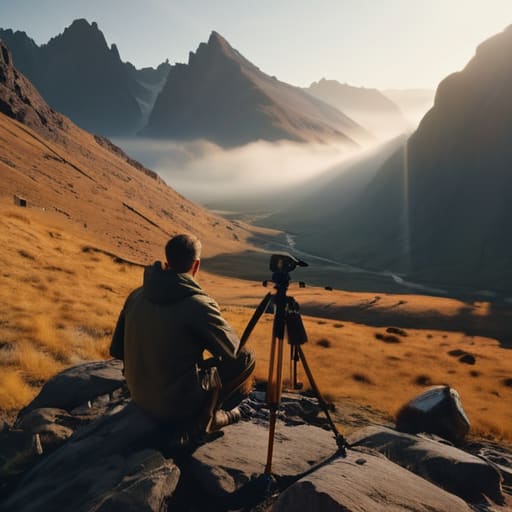
I once spent three days on a documentary shoot in a basement in Galway, trying to figure out why my footage looked like garbage, only to realize I’d spent my entire budget on a new prime lens and hadn’t even bothered to bring a single bounce board. That’s the trap most people fall into when they search for a complete guide to working solo; they think the solution is a bigger gear list or a more complex software suite. They think “solo” means being a one-man army with a massive kit, when in reality, it’s about having the discipline to realize that you are often your own worst enemy when it comes to managing light, time, and your own ego.
I’m not here to sell you a subscription to a productivity app or tell you which $5,000 sensor will fix your lack of composition. What I can give you is a practical look at how to actually manage a production when there is no assistant to carry the heavy stuff or a gaffer to tell you the sun has moved. This is a no-nonsense look at the logistics of survival—from how to cover a scene so you don’t starve in the edit, to knowing when to stop tweaking settings and just start rolling.
The Complete Guide to Working Solo Managing Distance and Discipline
When you’re working alone, your biggest enemy isn’t a difficult client or a blown fuse; it’s the distance between your intentions and your execution. Without a producer to nudge you or a focus puller to catch your mistakes, you have to become your own harshest critic. I’ve seen guys spend three hours obsessing over a lens flare only to realize they haven’t even set up the master shot. This is where freelance workflow optimization actually matters. It isn’t about some fancy app; it’s about creating a rigid internal structure that prevents you from drifting into the weeds. You need a checklist that lives in your head and on your clipboard, ensuring that the logistics are handled before you even think about hitting record.
Discipline is the only thing that keeps a single person operation scaling without you burning out by Tuesday. If you don’t manage your energy, you’ll find yourself staring at a timeline at 3:00 AM, trying to fix a lighting mistake that could have been solved with a simple bounce board and twenty minutes of patience. You have to treat your time like a finite resource—because it is. Deciding what not to do is often more important than the gear you bring to the set.
Freelance Workflow Optimization Reducing the Friction Between Idea and Imag
The friction usually starts before you even pick up the camera. It’s that heavy, stagnant space between a concept in your head and the actual logistics of a shoot. Most people think freelance workflow optimization is about buying a faster SSD or a better wireless monitor, but it’s actually about reducing the number of tiny, exhausting choices you have to make on set. If you’re spending twenty minutes debating whether to use a polarizer or a ND filter while the sun is actively moving, you’ve already lost. You need to build a repeatable system—a set of presets for your kit, your lighting ratios, and your file management—so that when the light is right, you aren’t thinking about the gear; you’re thinking about the frame.
When you’re a one-person operation, you don’t have a producer to buffer the chaos. This makes self-employment decision making a constant, draining process. To keep from burning out, you have to stop treating every minor technical hiccup like a crisis. I’ve learned that the best way to scale is to standardize the boring stuff. Pre-program your settings, pack your bags the night before, and create a checklist that doesn’t rely on your memory. If you can automate the mundane, you save your mental energy for the only thing that actually matters: the image.
Solopreneur Productivity Hacks for When the Only Witness Is the Lens
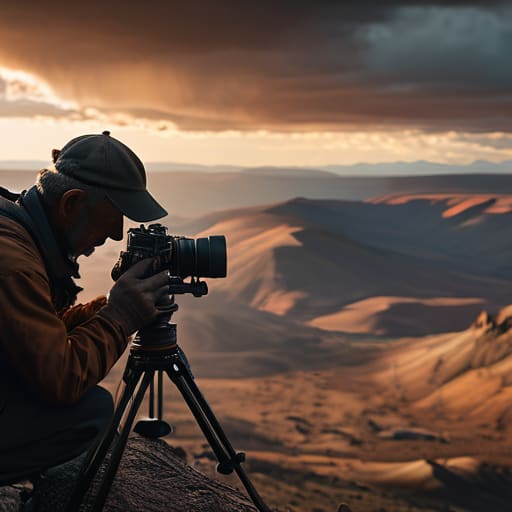
When you’re the only one on set, the silence can be deafening. There’s no AC to argue with, no Gaffer to check your exposure, and no one to tell you that you’ve been staring at a histogram for twenty minutes. This is where most people stumble; they mistake motion for progress. You might spend three hours perfecting a lens swap, but if you haven’t accounted for the sun moving behind a cloud, you’ve just wasted time. True solopreneur productivity hacks aren’t about faster software; they are about building a mental checklist that replaces a crew. You have to become your own most demanding supervisor, anticipating the technical failures before they happen.
The real danger isn’t the workload, it’s the lack of external friction. Without a producer or an assistant, your self-employment decision making can become dangerously circular. You’ll find yourself debating a lighting ratio for an hour that a seasoned key grip would have solved in thirty seconds. To combat this, I treat my schedule like a shot list. I don’t “work on the edit”; I “color grade the sequence” or “sync the audio.” If you don’t define the task, the day will simply evaporate into a blur of expensive, uncaptured potential.
Solo Business Time Management Solving the Problem of Endless Patience
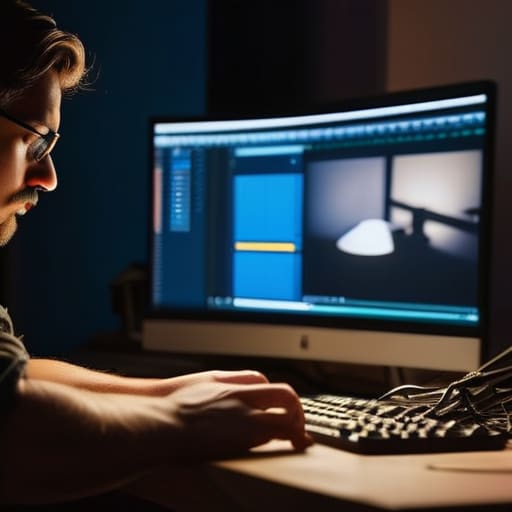
The biggest lie in this business is that being a solo operator means you’re in control of your schedule. In reality, you’re often just a slave to the physics of a shoot or the slow crawl of a render bar. When you’re a single person operation scaling from small corporate gigs to more complex narratives, the math changes. You aren’t just fighting the clock; you’re fighting the temptation to over-engineer every single frame. I’ve spent many long afternoons staring at a monitor, convinced that another hour of tweaking a grade would make it “perfect,” only to realize I was just avoiding the next task on my list.
Effective solo business time management isn’t about finding a better app; it’s about recognizing when you’ve reached the point of diminishing returns. You have to learn to draw a hard line between craft and procrastination. If the light is gone and the scene is covered, you stop. If the edit is functional and the story is clear, you move to the next project. If you don’t master that discipline, you won’t be a filmmaker—you’ll just be a person with a very expensive, very lonely hobby.
Managing Remote Work Isolation and the Weight of Self Employment Decision M
There is a specific kind of silence that settles in when you’re working alone, and it isn’t the peaceful kind you find on a quiet set during a setup. It’s the heavy, ringing silence of having no one to bounce an idea off of, no AC to tell you the lighting is too flat, and no producer to tell you you’re overthinking the shot. Managing remote work isolation isn’t about joining a coworking space or buying a better desk; it’s about recognizing that when you are the only person in the room, your internal critic becomes a tyrant. Without a crew to provide a reality check, you can easily spiral into a loop of indecision, staring at a monitor until the colors start to lie to you.
The real tax of this life is the mental fatigue of constant self-employment decision making. Every choice—from which lens to pack to whether to charge a client a premium for a weekend rush—rests entirely on your shoulders. There is no one to share the blame when a card fails or a client pivots mid-edit. You have to learn to trust your gut, but more importantly, you have to learn when to stop trusting it and just make a choice. In a single-person operation, momentum is often more valuable than perfection.
Single Person Operation Scaling Without Losing the Quality of the Work
Scaling a single person operation isn’t about buying a bigger camera or a faster hard drive; it’s about deciding what you are willing to stop doing. When I started out, I thought “scaling” meant taking on more clients, but I quickly learned that more clients usually just means more nights spent staring at a monitor in a dark room, wondering where the light went. Real growth comes from refining your freelance workflow optimization so that the technical grunt work doesn’t eat your creative brain. You have to build systems—templates for your color grades, pre-set lighting diagrams, and standardized file structures—that allow you to move from one job to the next without having to reinvent the wheel every single time.
The trap most people fall into is thinking that more gear equals more capacity. It doesn’t. It just means more things to carry, more batteries to charge, and more potential points of failure. If you want to grow, you need to master the art of strategic subtraction. This means knowing when to say no to a job that requires a crew you don’t have, and knowing which parts of your process can be automated or outsourced. True scaling is about increasing your output and your rate without sacrificing the intentionality of your light or the integrity of your frames.
Five Ways to Stop Fighting Your Gear and Start Making the Work
- Stop over-complicating your kit list. When you’re working alone, every extra pound on your shoulder or every unnecessary cable in your bag is just another thing that can fail or slow you down when the sun is moving. I’ve seen more single-man shoots ruined by a “perfect” rig that took forty minutes to balance than by a simple setup that was ready to roll in five.
- Master your lighting before you touch the power switch. If you’re solo, you don’t have a Gaffer to bounce a board or a Key Grip to steady a stand. Learn how to use the windows, the practicals already in the room, and the shape of the walls. If you can’t make a beautiful image with a single light and a piece of foam core, a $5,000 LED panel isn’t going to save you.
- Plan your coverage for the edit, not the shot. When there’s no director to argue with, it’s easy to get caught up in a single, beautiful angle and forget that you need the cutaway to make the scene work. Think three steps ahead: if you don’t get the medium shot and the close-up now, you’ll be staring at a screen in three weeks wishing you had the patience to reset the tripod.
- Build a “fail-safe” file workflow that doesn’t rely on your memory. When you are the director, the DP, and the editor, your brain is the most overworked part of the production. Write down your metadata, your lens choices, and your clip notes as you go. Don’t trust yourself to “remember how that light looked” when you’re sitting in the dark during the color grade.
- Learn when to walk away from the monitor. There is a specific kind of madness that comes from staring at a small screen for ten hours straight, trying to find a flaw that isn’t there. If the exposure is right and the focus is sharp, move on. You can’t fix a lack of discipline with more scrutiny; sometimes the best thing for the work is to finish the setup and go get some air.
The Bottom Line
Stop looking for a gear solution to a discipline problem; a better sensor won’t fix a lack of a shot list or a messy workflow.
Your most valuable asset isn’t your kit, it’s your ability to manage the friction between your creative intent and the physical reality of being the only person on set.
Scale by refining your process, not by buying more tools—true efficiency comes from knowing exactly where the light is coming from before you even touch the tripod.
The Myth of the Gear-Driven Soloist
You can spend your entire career waiting for the day you can afford a crew, but the truth is that working solo isn’t about finding a way to do everything at once—it’s about learning how to make one single, well-placed light and one purposeful camera movement do the work of ten people who don’t know how to see.
Gethin Moreau
The View From the Final Frame
At the end of the day, working solo isn’t about finding a magic piece of software or a more efficient way to color grade your footage. It’s about the friction you manage between the idea and the execution. We’ve talked about the discipline of the workflow, the necessity of managing your own isolation, and the way you have to scale your output without letting the quality of the image slip through the cracks. If you can master the distance between your eyes and the subject, and if you can maintain the discipline of the process when no one is watching, you’ve already beaten most of the people playing with expensive rigs. It comes down to light, distance, and the patience to see a project through to the final export.
I’ve spent decades watching people chase the newest sensor, thinking it would finally make them a filmmaker. It won’t. The gear is just a tool, often a heavy and distracting one, that sits between you and the story. Whether you are shooting on a cinema camera or a phone, the work remains a test of your ability to show up, set the light, and make a decision. Don’t wait for a crew to give you permission to be professional. Start where you are, use what you have, and focus on the only thing that actually matters: making sure that when the light hits the sensor, you’ve actually given yourself something worth seeing.
