I once spent three hours in a damp, freezing forest in Wales, trying to nail a slow pan for a documentary, only to realize my “professional” tripod was vibrating every time a light breeze hit the trees. I had spent more time obsessing over the sensor’s dynamic range than the fact that my support system was absolute junk. Most gear guides will try to drown you in weight capacities, payload ratings, and carbon fiber weave patterns, making you think there’s some magical math to solving how to choose a tripod. But let me tell you, a spec sheet won’t tell you how much your back will ache after a twelve-hour shoot, or whether the spreader will actually hold steady on uneven gravel.
I’m not here to sell you on the latest titanium-alloy nonsense or convince you that a more expensive brand equals a better image. My goal is to strip away the marketing fluff and talk about the mechanical reality of staying still. I’m going to show you how to look past the hype so you can find the one tool that actually stays out of your way, because at the end of the day, the best tripod is the one you forget is even there.
The Geometry of Stillness How to Choose a Tripod
When you’re standing in the mud or on a vibrating rooftop, you don’t care about the brand name on the legs; you care about whether the frame stays put. The first thing you need to understand is the fundamental difference between a video tripod vs photography tripod. A photographer wants a quick lock to hold a still frame, but a filmmaker needs a fluid head that actually flows. If your pan feels like it’s grinding through sand, or if it has that dreaded “stiction” where it jumps the moment you try to move it, you aren’t filming; you’re just fighting your own gear.
Then there is the eternal debate of carbon fiber vs aluminum tripods. I’ve carried both for twenty years. Aluminum is cheaper and handles the cold without feeling like a heat sink, but if you’re doing a lot of hiking to get to a remote location, that weight adds up. You aren’t looking for a spec sheet; you’re looking for something that won’t shake when the wind picks up, because no amount of post-production can rescue a blurry frame. Choose for the environment you actually work in, not the one you wish you were in.
The Material Divide Carbon Fiber vs Aluminum Tripods
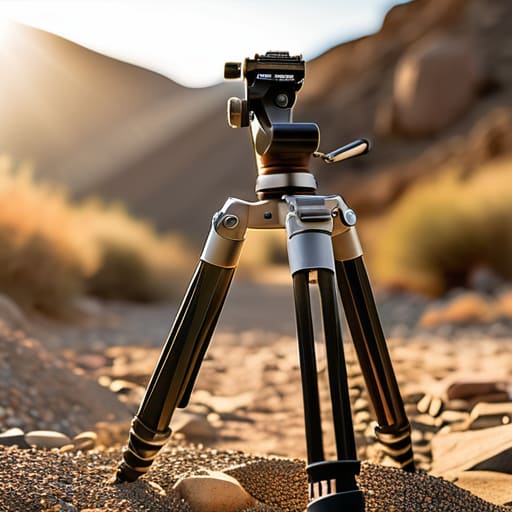
You’ll see plenty of debates online about carbon fiber vs aluminum tripods, usually involving someone quoting a spec sheet they found on a manufacturer’s site. Here’s the reality: aluminum is honest. It’s heavier, sure, and it’ll soak up more heat if you’re filming in the desert, but it’s predictable. If you’re working a local gig where you’re loading a van at the end of a twelve-hour day, that extra weight is often a fair trade for a lower price point and a bit more brute-force durability.
Carbon fiber is for when the weight is the enemy. If you’re hiking three miles up a ridge to catch a specific light, you’ll thank your lucky stars for the lighter kit. It also has a natural ability to dampen vibrations, which is a godsend for tripod stability for long exposure or when you’re shooting handheld-style movements on a fluid head. But don’t be fooled—carbon fiber isn’t a magic wand that makes a bad setup look professional. It just makes the gear easier to carry to the place where you actually do the work.
Calculating Load Real Tripod Weight Capacity for Dslr
The spec sheet will tell you that a tripod can hold twenty pounds, and you’ll think that’s plenty for your mirrorless setup with a prime lens. It isn’t. What they don’t tell you is that “capacity” is a laboratory number, measured in a vacuum with no wind, no movement, and no human hands touching the gear. When you’re out in the field, you aren’t just supporting the camera; you’re supporting the fluid head, the heavy-duty cables, and the inevitable weight of your own hands as you adjust the pan knob.
If you’re looking at tripod weight capacity for DSLR setups, you need to build in a massive safety margin. I always tell people to look at the weight of their heaviest rig—lens, cage, monitor, and battery included—and then double it. If you’re working on a tripod that’s pushed to its absolute limit, you’ll feel it in every micro-vibration. You don’t want to be fighting the gear during a critical moment; you want the tripod to disappear so the image can actually exist.
Motion vs Stasis Video Tripod vs Photography Tripod
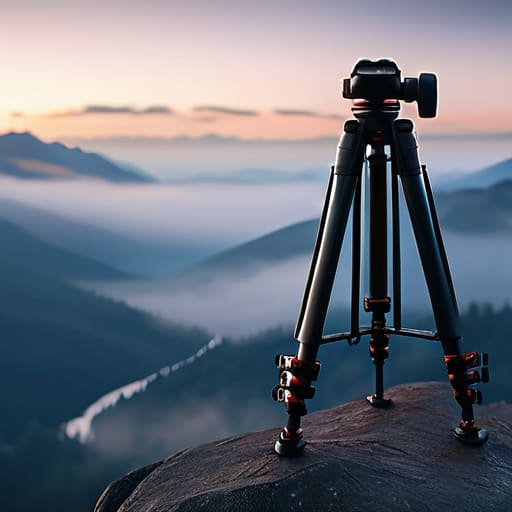
If you walk into a shop and grab the first sturdy-looking thing you see, you’re probably going to end up with a tool that’s half-right for everything and right for nothing. The fundamental divide comes down to what you’re actually doing with the glass. A photography tripod is built for stasis. It’s designed to hold a heavy lens perfectly still for a long exposure, often featuring a center column that climbs high to get a perspective that wouldn’t be possible otherwise. It’s about locking things down and staying there.
But if you’re shooting moving images, that rigidity becomes your enemy. In the world of video tripod vs photography tripod debates, the deciding factor isn’t just weight; it’s the head. A photo head is a clamp; a video head is a fluid mechanism. You need that controlled, viscous resistance to prevent your pans from looking like a nervous twitch. If you try to use a standard photo tripod for a slow cinematic tilt, you’ll spend more time fighting the jerky movements in post than you would have spent just setting up a better light.
Defeating Vibration Tripod Stability for Long Exposure
If you’re planning on shooting a long exposure—whether it’s a star trail or a waterfall that looks like silk—you aren’t just fighting gravity; you’re fighting the earth itself. Every passing truck, every gust of wind, and even the mechanical shutter of your own camera can introduce enough micro-vibration to turn a sharp image into a blurry mess. This is where the theoretical debate of carbon fiber vs aluminum tripods meets the harsh reality of the field. While carbon fiber absorbs some of those high-frequency vibrations better, it doesn’t matter how expensive your legs are if you haven’t mastered the physics of the setup.
To achieve true tripod stability for long exposure, you need mass and contact. I’ve seen too many people try to use a lightweight travel kit when they should be hanging a weighted bag from the center column. If your tripod is light, you have to make it heavy. Use the hook. Hang your gear bag, your extra lens, or even a heavy jacket from the center column to lower the center of gravity. And for God’s sake, turn off your image stabilization; if the camera thinks it needs to compensate for movement that isn’t happening, it’ll actually create the very blur you’re trying to avoid.
Mobility and Utility Best Tripod for Travel Photography
When you’re hiking three miles uphill just to catch the blue hour, the math changes. You stop caring about the absolute stability of a heavy-duty studio leg and start obsessing over the weight in your pack. This is where the debate of carbon fiber vs aluminum tripods stops being academic and becomes personal. Aluminum is cheaper and tougher in a pinch, but after four hours of trekking, you’ll find yourself wishing you’d spent the extra money on carbon fiber just to save your shoulders the grief.
The goal is finding the best tripod for travel photography that doesn’t force you to choose between a steady shot and a broken back. You want something that collapses down small enough to fit beside your water bottle but remains rigid enough that you aren’t fighting wind or micro-jitters. I’ve seen people try to swap to a monopod vs tripod use cases strategy to save weight, and while a monopod is fine for a quick street shot, it won’t give you the precision you need for a landscape. If you can’t trust the legs to stay planted, you might as well be shooting handheld.
Five Hard Truths Before You Swipe Your Card
- Stop looking at the maximum payload on the box. If a tripod says it holds 20 pounds, it means it won’t snap in half; it doesn’t mean it won’t bounce like a trampoline when you touch the camera. Always aim for a capacity that is at least double what your rig actually weighs, or you’ll spend your entire shoot fighting micro-jitters.
- Check the fluid head before you even look at the legs. You can have the most expensive carbon fiber legs in the world, but if the pan is jerky or the tilt feels like it’s fighting you, your footage is dead on arrival. A good head should feel like an extension of your hand, not a piece of hardware you’re wrestling with.
- Don’t overlook the “reach” vs “height” trade-off. A tripod that sits too low forces you into a permanent crouch, which ruins your focus and your back by hour four. Conversely, if you’re shooting low-angle shots, make sure the legs can actually collapse enough to get near the dirt without the center column becoming a vibrating mess.
- Test the leg locks like your career depends on it. I’ve seen too many beginners buy a “lightweight” setup only to have a twist-lock slip halfway through a delicate pan. Whether it’s clips or twists, they need to be intuitive and, more importantly, they need to stay locked when the wind starts picking up.
- Consider the footprint of your environment. If you’re shooting in tight interior spaces or cramped sets, a wide-spreading tripod is a liability that people will trip over. If you’re out in the elements, you need something with enough surface area to bite into the ground. Choose the tool for the terrain, not the spec sheet.
The Bottom Line
Stop looking at the maximum payload on the spec sheet and start looking at the weight of your actual rig; a tripod that’s rated for fifty pounds but wobbles under ten is just an expensive way to ruin a shot.
Choose your material based on your actual life, not a fantasy of being a lightweight traveler—aluminum is honest and sturdy for the price, while carbon fiber is a luxury you only pay for when every ounce matters during a long hike.
If you’re shooting video, buy a video head, not a photography tripod with a prayer; you can’t fix a jerky, unmotivated pan in the edit, no matter how much you spend on a colorist.
The False Promise of the Spec Sheet
Stop looking at the maximum load capacity on the box and start thinking about how much weight you actually want to carry from the van to the location. A tripod that can hold fifty pounds is useless if it’s too heavy to reach the spot before the sun goes down, and a tripod that’s light enough to carry is a disaster if it shudders every time a truck drives past. You aren’t buying a weight rating; you’re buying the ability to stand still.
Gethin Moreau
The Final Setup
At the end of the day, choosing a tripod isn’t about finding the most expensive piece of kit or the one with the longest list of technical specs. It’s about understanding the relationship between your weight, your environment, and the physics of your shot. You need to decide if you’re fighting the wind on a ridge or navigating a cramped interior, and you need to know that whatever you pick, it can handle the rig without a hint of micro-jitter. Whether you go with the lightweight convenience of carbon fiber or the brute, reliable density of aluminum, the goal remains the same: eliminating the variables you can’t control so you can focus on the ones you can. Don’t let a mismatch in load capacity or a flimsy head turn a perfect composition into a technical failure.
I’ve spent decades watching people obsess over sensor resolution and lens sharpness, only to have a mediocre tripod ruin a beautiful setup. A camera is just a box that captures light, but a tripod is what gives that light a sense of intention. It provides the stillness required to let the story breathe. Once you have a foundation you can actually trust, you can stop worrying about the gear and start looking at the light. Stop chasing the perfect spec sheet and start looking for the tool that disappears into your workflow. Because when the tripod is doing its job right, you won’t even know it’s there—and that is exactly when the real work begins.
