
I remember a shoot in a drafty warehouse outside of Bristol back in ’04. The light was coming from a single, dying 2K through a silk, and the mood was even worse. We were twelve hours in, the heating had failed, and the AD was trying to motivate a tired grip by promising “great footage.” It didn’t work. You can buy the latest Arri Alexa and think it’ll save your production, but if you don’t understand how to look after crew on set, you aren’t making cinema—you’re just managing a slow-motion collapse. A hungry, freezing, or ignored crew will give you technical perfection, but they will never give you the soul of a performance.
I’m not here to give you a HR-approved manual on “workplace wellness” or a list of expensive catering apps. I want to talk about the practical, unromantic reality of keeping a production from eating itself alive. I’ll tell you what actually matters—from the timing of a coffee run to the way a DP handles a mistake—so you can focus on the craft instead of damage control.
The Human Variable Why Knowing How to Look After Crew on Set Matters
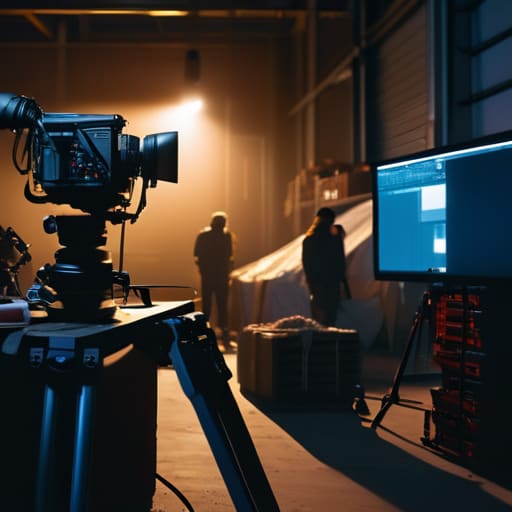
I’ve spent enough years in the trenches to know that a production isn’t just a collection of high-end sensors and glass; it’s a delicate ecosystem of tired, hungry people. You can have the most sophisticated film set health and safety protocols written in a binder somewhere, but they won’t save a shot if your key grip is too exhausted to steady a flag. When people talk about technical precision, they often forget that the most volatile piece of equipment on any set is the human brain. If you aren’t managing long filming hours with an eye toward actual sustainability, you aren’t directing a film—you’re just managing a slow-motion burnout.
The reality is that a crew that feels respected will find a way to make a single light source look like a masterpiece. Conversely, a crew that is being run into the ground will give you the bare minimum required to get to the wrap call. I’ve seen more beautiful images born from a well-rested, well-fed crew on a shoestring budget than I have from a demoralized team on a massive studio lot. At the end of the day, the quality of your coverage is directly tied to the morale of the people holding the gear.
Fuel and Focus Why on Set Catering Standards Dictate Your Final Cut

I’ve sat in a dark corner of a soundstage at 3:00 AM, watching a grip try to adjust a heavy flag with hands that were shaking from nothing but a caffeine crash and a lack of real sustenance. You can talk all you want about on-set catering standards, but if you’re serving lukewarm pizza and sugary energy drinks for the third day in a row, you aren’t just being cheap—you’re sabotaging the image. When the blood sugar drops, the focus goes with it. A crew that is physically crashing is a crew that starts making mistakes, and those mistakes show up in the way a light is positioned or how a cable is taped down.
Managing long filming hours is a marathon, not a sprint, and you can’t run a marathon on empty. If the craft services table is an afterthought, the mood on set follows suit. It’s about more than just filling stomachs; it’s about maintaining the cognitive baseline of the people doing the heavy lifting. I’ve seen productions fall apart not because the talent failed, but because the crew was too exhausted to care about the nuances of a setup. Feed them real food, give them actual breaks, and you’ll find they’ll fight a lot harder to make your vision work.
The Cost of Exhaustion Managing Long Filming Hours and Diminishing Returns
I’ve sat in the back of a van at 3:00 AM, watching a grip try to rig a heavy silk while his eyes were practically rolling into the back of his head. That’s when you realize that managing long filming hours isn’t just a logistical headache; it’s a liability. There is a mathematical certainty to exhaustion. After hour twelve, the precision required to nail a focus pull or a lighting adjustment starts to evaporate. You aren’t just losing time; you are losing the quality of the image. You might think you’re saving money by pushing through a late night, but you’re actually just paying for the privilege of shooting mistakes that you’ll have to spend three days trying to fix in the grade.
We often talk about film set health and safety protocols in terms of tripping hazards or electrical loads, but the most dangerous element on a set is a tired brain. When people are running on fumes, they stop seeing the nuances of the light and start looking for the exit. If you aren’t respecting crew rest period regulations, you aren’t being a “hardworking producer”—you’re just presiding over a slow-motion train wreck.
More Than Compliance Production Crew Mental Health Support as Essential Gea
We tend to talk about film set health and safety protocols in terms of tripping hazards, heavy lifting, or electrical grounding. That’s fine, but it’s only half the story. If you treat your crew like replaceable components in a machine, you’re going to get machine-like results: rigid, uninspired, and prone to breaking exactly when the light gets good. Real production crew mental health support isn’t about HR seminars or posters in the craft services tent; it’s about the atmosphere you cultivate when things inevitably go sideways at 3:00 AM.
When a lens cracks or a location falls through, the way a producer or DP handles that pressure dictates the collective cortisol levels of the entire unit. You can’t just check a box and say you’ve met your legal obligations. You have to recognize when the production assistant is hitting a wall or when the grip team is too burnt out to be precise. True leadership is recognizing that a calm, respected crew is the most valuable piece of kit you’ll ever have on set. If they don’t feel safe to speak up when they’re exhausted, you aren’t just risking a mistake—you’re risking the work itself.
The Silent Architecture of Safety Rigorous Film Set Health and Safety Proto
We spend a lot of time arguing about the sharpness of a prime lens or the dynamic range of a new sensor, but we rarely talk about the physical architecture that keeps a set from collapsing. When I talk about film set health and safety protocols, I’m not talking about checking boxes to satisfy an insurance adjuster. I’m talking about the difference between a controlled environment and a chaotic one where someone eventually trips over a poorly taped cable or gets hit by a swinging C-stand. A set is a dense, moving machine of heavy iron, electricity, and high-tension cables; if the logistics of safety aren’t treated as the foundation of the shoot, the whole thing is built on sand.
It’s easy to view safety as a series of restrictive rules, but in reality, it’s about predictability. When the grips know exactly how a line is being handled and the electrics have a clear, unobstructed path, the crew moves with a confidence that translates directly into the work. If you treat safety as an afterthought, you’re essentially inviting a crisis that will derail your schedule far more effectively than a broken camera ever could.
Respecting the Clock Crew Rest Period Regulations and Production Assistant
I’ve spent enough nights in a van or a dim corner of a studio to know that the clock is either your greatest ally or your most dangerous enemy. When we start cutting into crew rest period regulations, we aren’t just talking about ticking boxes for a legal department; we’re talking about the moment the person holding the boom pole stops hearing the dialogue and starts hearing a hum. A crew that hasn’t had a legitimate window of sleep isn’t just “tired”—they are a liability. You can ignore the math of a twenty-hour day, but you can’t ignore the physics of a human being reaching their breaking point.
This is where production assistant welfare duties become more than just a line in a handbook. PAs are often the first to feel the squeeze of a schedule that’s running behind, and they are usually the ones tasked with making sure everyone else is okay while they themselves are running on fumes. If you treat your youngest crew members like disposable batteries, you’re building a culture of resentment that will leak into every frame you shoot. Respecting the clock means acknowledging that quality work requires a baseline of human dignity, and no amount of overtime pay can replace the clarity that comes from a proper night’s sleep.
Five Ways to Stop Treating Your Crew Like Rental Gear
- Listen to the person holding the boom. They aren’t just a way to get sound into the file; they are the first person to hear the room’s acoustics and the first to notice if the energy is shifting. If your sound mixer tells you the room feels “off,” don’t ignore them. They’re reading the air, and usually, they’re right.
- Respect the “Small” Jobs. A production assistant isn’t a disposable asset to be run ragged on coffee runs and trash duty. If you treat your PAs like they don’t matter, you’re creating a culture of resentment that will leak into every department. A crew that feels seen is a crew that stays sharp when the sun starts going down.
- Stop the “Just One More” Lie. We’ve all been there—the light is fading, the talent is flagging, and you think you can squeeze out one more setup. You can’t. When you push past the point of diminishing returns, you aren’t getting better shots; you’re just getting tired people making expensive mistakes. Call it, wrap it, and move on.
- Communicate the ‘Why,’ Not Just the ‘What.’ Don’t just bark orders like you’re running a drill. If we’re moving the entire lighting rig because the sun is hitting a window at an angle we didn’t account for, tell them. When people understand the technical necessity of a move, they aren’t just moving heavy boxes; they’re solving a problem with you.
- Guard the Breaks Like They’re Golden Hour. A scheduled lunch isn’t a suggestion; it’s a requirement for a functioning brain. If you eat into the crew’s downtime to chase an extra twenty minutes of coverage, you’re stealing from the quality of the next scene. You can’t fix a lack of focus in the edit, no matter how much you spent on the sensor.
The Bottom Line for the Producer’s Ledger
Stop viewing crew welfare as a line item to be trimmed; it is actually a form of insurance against the expensive mistakes born from fatigue and resentment.
A well-fed, rested crew isn’t a luxury—it’s the foundation of the coverage you need to actually finish the film without a disaster in the edit.
Respect the human limits of your team as much as you respect the technical limits of your gear, because no amount of post-production can fix a scene shot by a crew that has checked out mentally.
The Real Bottom Line
You can spend sixty thousand dollars on a new sensor thinking it’ll solve your image problems, but if your crew is running on four hours of sleep and lukewarm coffee, that sensor isn’t going to save you. A tired, hungry crew doesn’t just work slower; they stop seeing the details, they stop catching the mistakes, and eventually, they stop caring. You aren’t just managing a production; you’re managing human stamina, and that’s the only thing that actually shows up in the final cut.
Gethin Moreau
The Final Frame
At the end of the day, looking after your crew isn’t some HR checkbox or a way to avoid a lawsuit; it’s about protecting the integrity of the image. You can spend your entire budget on the latest anamorphic glass or a high-speed sensor, but if your grip is stumbling from lack of sleep or your AC is too hypoglycemic to pull a cable, that gear is useless. We’ve talked about the food, the hours, the safety protocols, and the mental load, but it all boils down to one thing: the quality of the work is a direct reflection of the environment you build. If the atmosphere is toxic or the crew is depleted, the footage will eventually show it. You cannot manufacture magic in a room full of exhausted, resentful people.
I’ve sat in edit suites looking at beautiful, technically perfect shots that felt hollow because the energy on set was fractured. Conversely, I’ve seen miracles captured on battered old cameras because the crew felt seen, fed, and respected. Don’t mistake the production for a series of line items on a spreadsheet. It is a living, breathing organism. If you want to make something that lasts, stop obsessing over the spec sheet for a moment and look at the people standing behind the camera. That is where the real production value lives.
