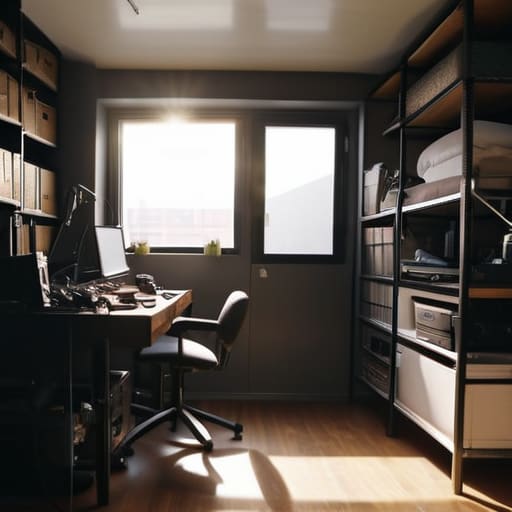
I remember a documentary shoot in a cramped apartment in South London back in ’04. We had three people, a heavy tripod, and enough cables to wire a small village, all crammed into a kitchen that barely fit a toaster. I spent half the morning apologizing to the talent for bumping into their bookshelf, while my assistant kept insisting we needed a wider lens to “capture the scale.” That’s the mistake people always make; they think the solution to a tight room is a piece of glass, when the real problem is how to shoot in a small space without suffocating the image.
I’m not here to sell you a wider focal length or a specialized gimbal that’ll just get stuck on a doorframe. I want to talk about how you manage the light when there’s nowhere to hide a stand, how you find the geometry in a mess of furniture, and how to build enough coverage so you don’t end up with a single, un-cuttable wide shot. This isn’t about gear; it’s about spatial discipline and knowing exactly where to place your light before you even think about touching the camera.
Understanding How to Shoot in a Small Space
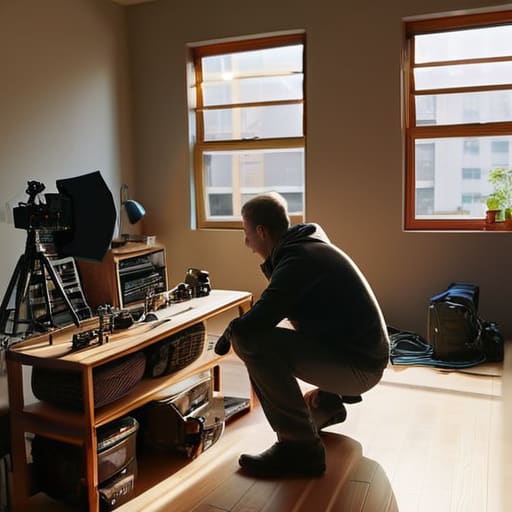
Before you even reach for a tripod, you have to accept the reality of the room. When the walls are pushing back against you, your primary adversary isn’t the lack of space; it’s the lack of control. In a massive studio, you can hide a light stand behind a flag or tuck a C-stand in a corner. In a cramped apartment or a tiny office, every piece of gear becomes a physical obstacle that dictates where you can stand and where the talent can move. You aren’t just filming a subject; you are negotiating a truce with the architecture.
The instinct for most people is to grab a wide angle lens for tight spaces and hope the extra field of view solves the problem. It usually doesn’t. It just shows more of the clutter you were trying to hide. Instead, I’ve learned that success comes from minimizing gear footprint and being surgical with your placement. You have to think about the light coming from the window or that single overhead fixture and figure out how to shape it before you even think about the sensor. If you can’t move the walls, you move the light, and you do it with intention.
Key Things to Know
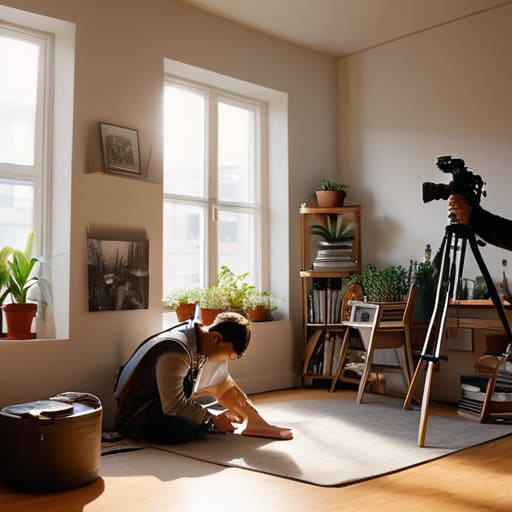
First, let’s talk about the physics of the room. When the walls are pushing in on you, your biggest enemy isn’t a lack of resolution; it’s the lack of air. You’ll be tempted to grab a wide angle lens for tight spaces just to see the whole set, but be careful. If you go too wide, you lose the ability to direct the eye, and suddenly everything looks like a distorted fishbowl. I’ve spent more time fighting the geometry of a cramped bedroom than I have fighting technical glitches, and the lesson is always the same: use your focal length to create the illusion of space, not just to cram more junk into the frame.
Then there is the light. In a small studio, light doesn’t just illuminate; it bounces, hits every corner, and creates a messy, unintentional glow that ruins your contrast. You can’t just throw a big softbox in there and hope for the best. You need compact lighting setups—small, directional LED panels or even just a single key light with a tight grid—to keep the light where you actually want it. If you don’t control the spill, you aren’t filming a scene; you’re just filming a room.
Practical Tips and Steps
First, stop looking at your lens kit and start looking at your floor plan. Most people rush in with a wide angle lens for tight spaces, thinking the wider the better, but all they end up doing is creating a distorted, fish-eye mess that makes the viewer feel nauseous. Instead, I prefer to find the most flattering angle first and then work backward. If you can’t get the camera back, you have to rethink your blocking. Sometimes moving a chair six inches or having an actor sit on the floor is the difference between a professional shot and a claustrophobic disaster.
When it comes to the light, forget the big stands and heavy modifiers. You need compact lighting setups that don’t take up the precious three feet of walking space you have left. I’ve spent half my career using small LED panels or even just bouncing a single light off a white wall to keep the shadows from swallowing the room whole. Minimizing gear footprint isn’t just about convenience; it’s about survival. If your kit is so large that you’re tripping over cables every time you try to change a setup, you aren’t filming—you’re just fighting your equipment.
Common Mistakes to Avoid
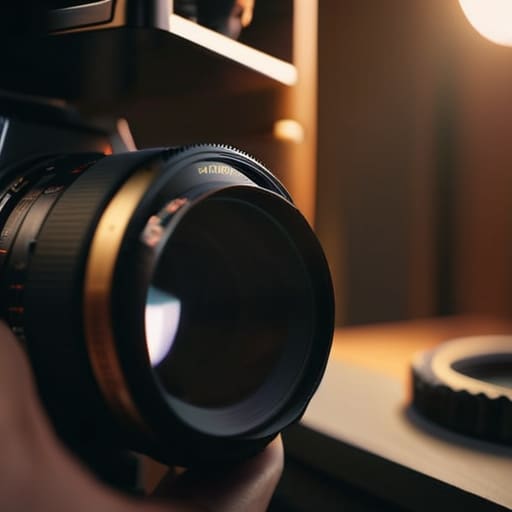
The biggest mistake I see—and I’ve lost count of how many times I’ve watched a junior DP make it—is the immediate, desperate reach for a wide angle lens for tight spaces. People think a 14mm is a magic wand that solves everything, but all it really does is distort your subject’s face and make the room look like a funhouse mirror. If you can’t find the distance to create a natural perspective, you aren’t solving the problem; you’re just hiding it behind barrel distortion.
Then there’s the clutter. I see crews roll in with enough hardware to light a stadium, only to realize they’ve trapped themselves in a corner. They spend half the day moving light stands just to avoid hitting a tripod leg. You have to focus on minimizing gear footprint from the jump. If your lighting solution requires three people to move a single C-stand, you’ve already lost the battle against the architecture. Stop trying to bring the studio to the room and start learning how to work with what the room actually allows you to do.
Final Thoughts
At the end of the day, don’t let the four walls intimidate you. Most of the time, the difference between a claustrophobic mess and a controlled, intimate shot isn’t the glass you’re using, but how much you respect the space you actually have. You can grab a wide angle lens for tight spaces to cheat the distance, but if you haven’t thought about where the light is falling or how much shadow you’re throwing into the corners, you’re just filming a cramped room with more distortion.
If there’s one thing I’ve learned from twenty years of lugging kits into places that barely fit a tripod, it’s that less is almost always more. Stop looking at the gear list and start looking at the floor plan. Focus on minimizing gear footprint so you can actually move when the scene demands it, rather than spending half your shoot time tripping over power cables. If you can master the light and the blocking first, the camera becomes an afterthought. And honestly? That’s when the real work starts to look good.
Five Ways to Stop Fighting the Room
- Stop looking for the wide lens and start looking for the corners. In a cramped room, a wide lens often just shows you more of the clutter you’re trying to hide. Instead, use a tighter focal length to compress the space or isolate a subject, and focus on what you can control within that small frame.
- Prioritize your light source before you even unwrap the tripod. If you can’t fit a big softbox in the room, don’t try to force it; you’ll just end up tripping over cables. Use smaller, more directional lights or even bounce what you have off a white wall to create a soft, manageable glow that doesn’t eat up your floor space.
- Think about the edit, not just the shot. When you’re squeezed into a corner, your coverage is going to be limited. Don’t just film one long, awkward master shot; look for the tight close-ups and the details that can help you stitch a scene together in post when you don’t have the room for traditional coverage.
- Manage your cable discipline like your life depends on it. In a small space, a stray XLR or power cable isn’t just an eyesore—it’s a trip hazard that will end your shoot prematurely. Tape everything down or keep your gear tight to the walls so you actually have room to move when the talent does.
- Use depth, even when there isn’t any. If you’re stuck against a flat wall, try to create a sense of layers by placing something—anything—in the extreme foreground. A shoulder, a piece of furniture, or even a lamp out of focus can give the image some breathing room so it doesn’t feel like a hostage video.
The Bottom Line
Stop looking at the spec sheet and start looking at the floor plan; your biggest hurdle isn’t sensor size, it’s the physical distance between your lens and the subject.
Light is your only way to create depth when you don’t have the room to move; if you can’t create separation with distance, you have to create it with shadows.
Coverage is more important than perfection; shoot for the edit by finding the angles that actually allow a cut, even if it means sacrificing the “ideal” shot you had in your head.
## The Illusion of Space
Stop looking for a wider lens to fix your problem; you aren’t lacking field of view, you’re lacking light and room to breathe. In a tight room, your real job isn’t capturing the subject, it’s managing the shadows and finding enough distance between your light source and the wall so the whole room doesn’t look like a cardboard box.
Gethin Moreau
The View from the Corner
At the end of the day, shooting in a cramped room isn’t a technical puzzle to be solved by buying a wider lens or a more expensive sensor. It’s a game of inches. You win by prioritizing your light placement before you even touch the tripod, by understanding that coverage is more important than perfection, and by learning to work with the geometry of the room rather than fighting against it. If you’ve managed your shadows, kept your focal lengths sensible, and ensured you have enough room to actually make a cut in the edit, you’ve already done the hard part. Don’t let the lack of square footage trick you into thinking the image has to be small; control the light, and you control the space.
I’ve spent more time squeezed into broom closets and tiny apartments than I have on expansive soundstages, and if there’s one thing those years taught me, it’s that constraints are often where the best decisions are made. When you can’t rely on sweeping movements or massive lighting rigs, you’re forced to actually think about the frame. You start seeing the texture of the walls and the way a single lamp can tell a story. So, stop worrying about what your room lacks and start looking at what the light is actually doing. The best work I’ve ever shot didn’t come from a massive budget or a sprawling set; it came from making something meaningful out of very little.
