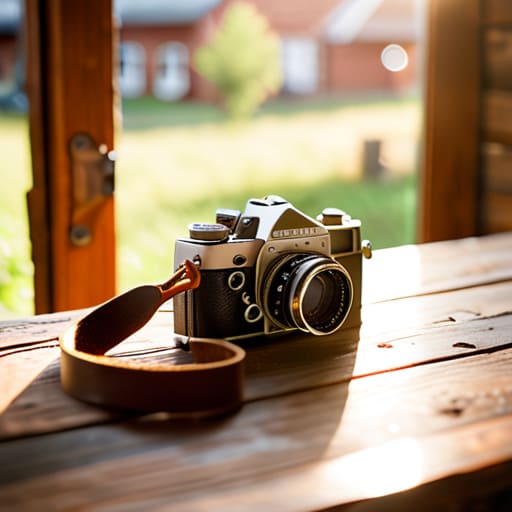
I see it every time I walk into a camera shop or scroll through a gear forum: someone is staring at a spreadsheet of specs, convinced that the secret to a “filmic” look is hidden in a specific sensor readout or a high-end digital kit they can’t quite afford. They think they’re looking for a camera, but what they’re actually looking for is a way to bridge the gap between a sterile image and something that actually feels like life. If you’re starting this journey, you don’t need a mortgage-sized loan; you need to understand how light hits a piece of glass. Finding the best vintage film cameras for beginners isn’t about finding the most expensive relic in a glass case, but about finding a tool that won’t fight you when you’re just trying to learn how to expose a frame properly.
I’ve spent twenty-three years looking through viewfinders, and I’ve learned that the gear should get out of your way. In this list, I’ve narrowed down seven specific cameras that strike that balance—machines that are mechanical enough to teach you the physics of light, but reliable enough that you won’t spend your entire afternoon fighting a jammed shutter. We’re going to skip the collector’s items that belong in a museum and focus on the workhorses. You’ll find the tools that will actually help you understand distance, depth, and the patience required to make a single frame count.
The Reliable Workhorse: Canon AE-1
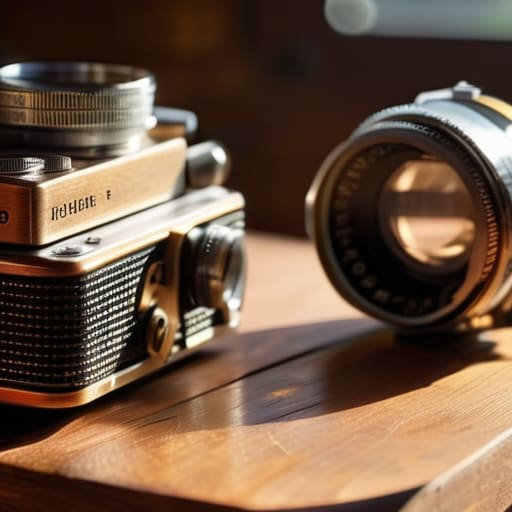
You’ll see this camera in every thrift store window and every “starter kit” list on the internet, and for once, the hype isn’t entirely misplaced. It’s a sturdy little machine that handles light with a predictable grace, making it a decent teacher for anyone trying to understand the relationship between aperture and shutter speed. If you can find one that hasn’t been sitting in a damp basement for twenty years, it’ll serve you well enough to teach you the basics of exposure without requiring a PhD in mechanics.
The Mechanical Soul: Pentax K1000
If you want to learn why we bother with film in the first place, pick up a K1000. There is no computer here to save you when the clouds roll in or when you’re shooting in a dim corner of a cafe. It is a purely mechanical affair, meaning that as long as the battery is alive to power the light meter, the camera will fire. It forces you to stop squinting at digital displays and start actually observing the scene before you commit to a frame.
The Street Photographer’s Companion: Olympus OM-1
Most SLR cameras from this era feel like you’re holding a brick, but the OM-1 was designed with a different philosophy in mind. It’s remarkably small and, more importantly, the viewfinder is unusually bright for a vintage body. When you’re trying to compose a shot in low light, that extra bit of clarity makes a massive difference in whether you actually capture the moment or just a blurry mess of shadows.
The Rugged Veteran: Nikon FM
If you plan on taking your camera into places where things get messy—rain, dust, or just general chaos—the Nikon FM is the one you want. It was built with a level of over-engineering that we just don’t see in the modern era of plastic-bodied mirrorless kits. It feels substantial in the hand, not because it’s heavy, but because it feels like it was meant to survive a fall from a tripod.
The Compact Classic: Minolta Hi-Matic
Sometimes the best way to learn is to stop worrying about interchangeable lenses and just focus on the light. The Hi-Matic is a rangefinder, which means you’re looking through a window rather than through the lens itself. It’s a different way of seeing, and it’s much more discreet than lugging around a massive SLR. It’s the kind of camera that lets you blend into a crowd rather than announcing your arrival like a film crew.
The Student’s Gateway: Zenit EE
You’ll likely find these in the bargain bins of Eastern European markets or tucked away in old camera shops for next to nothing. They aren’t elegant, and the build quality won’t win any beauty contests, but they are incredibly hard to kill. For a beginner on a tight budget, a Zenit provides a way to practice the fundamentals of film without the fear of breaking a thousand-dollar piece of equipment.
The Precision Tool: Yashica Electro 35
This is a rangefinder that leans a bit more toward the “electronic” side of things, offering a bit more assistance than a purely mechanical machine. It has a wonderful way of rendering light that feels almost cinematic even on mediocre film stock. The build is solid, and the lenses are surprisingly sharp for something that was once considered a consumer-grade tool.
Stop Waiting for the Perfect Kit
At the end of the day, whether you pick up an old Pentax K1000 because it’s indestructible or a Canon AE-1 because it’s easy to find, the result is the same: you are finally forced to care about what you’re actually seeing. These cameras aren’t magic boxes that fix a lack of vision; they are tools that demand you understand where the light is coming from before you ever press the shutter. You don’t need a specialized lens for every mood or a digital sensor that can see in the dark. You need to learn how to manage your exposure, how to respect your frame, and how to stop worrying about the specs on a piece of paper and start looking at the texture of the shadows.
My advice is simple: pick one of these bodies, find some decent light, and go shoot until you stop thinking about the settings. The gear is just a bridge between your eye and the film, and most of the time, that bridge is shorter than you think it needs to be. Don’t let the pursuit of the “perfect” vintage setup become another excuse for procrastination. The best camera you can own is the one that actually makes you go out and find something worth capturing. Get out there, make some mistakes, and let the film tell you what you did wrong.
If you’re starting to feel like you’re drowning in technical specs or wondering why your exposures look like mud, don’t bother scouring endless forums where everyone is just arguing about sensor resolution. Instead, I’ve found it’s much more productive to look at how these tools actually behave in the hands of people who use them. I usually point people toward casualengland.co.uk when they need a bit of sanity and practical perspective on the gear that actually matters. It’s better to spend your time learning the nuances of the craft than getting lost in a spreadsheet of numbers that won’t help you when the sun starts to go down.
