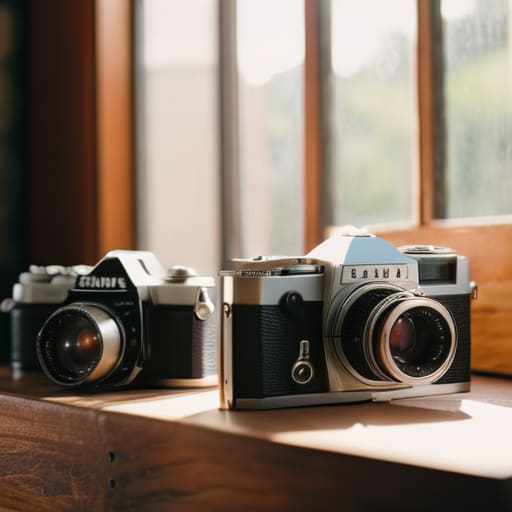
I spent my early years watching the light hit the dust in a studio, knowing that every frame we rolled cost more than a week’s groceries. Today, everyone’s obsessed with dynamic range and sensor readout speeds, but they’ve forgotten that the soul of an image usually lives in the imperfections. If you’re looking for the best vintage film cameras for beginners, you aren’t just looking for a way to capture a picture; you’re looking for a way to actually see the light. Most people make the mistake of thinking they need a museum piece to get started, when really, you just need something that forces you to stop clicking blindly and start thinking about your exposure before you commit to the roll.
In the following list, I’ve stripped away the gear-head fluff to give you seven tools that actually matter. I’m not here to sell you on some overpriced collector’s item that sits in a glass case; I’m pointing you toward cameras that will teach you the fundamentals of light, distance, and patience. You’ll learn which mechanical workhorses are worth your time and which ones are just expensive paperweights, ensuring that your first few rolls are spent making art rather than fighting your equipment.
The Canon AE-1: The Reliable Workhorse
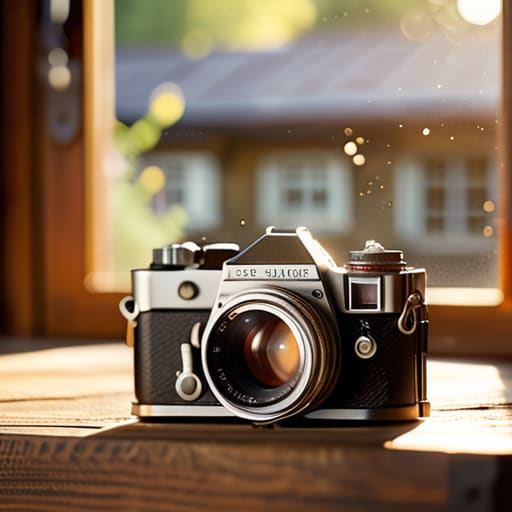
If you want to learn how a camera actually functions without fighting the machine every step of the way, this is where you start. It’s the camera that practically defined an era, and for good reason; the shutter is snappy, and the interface is intuitive enough that you won’t spend your entire afternoon reading a manual instead of watching the light. It’s a forgiving little box that lets you focus on the composition rather than the mechanics of the exposure.
Olympus OM-1: Small Body, Big Lessons
Most beginners think they need a massive rig to feel like a “real” photographer, but the OM-1 proves that the best camera is often the one that doesn’t get in your way. It’s remarkably compact, which means you’ll actually take it out of the bag and into the street instead of letting it collect dust on a shelf. The viewfinders are exceptionally bright, which is a godsend when you’re trying to judge depth and distance in tricky, low-light environments.
Pentax K1000: The Student's Standard
There is a reason every photography textbook from the last forty years has featured this camera: it is nearly impossible to break and even harder to mess up. It’s a purely mechanical beast that strips away the distractions of modern technology, leaving you with nothing but a lens, a shutter, and the physics of light. If the battery dies, you can still shoot, which is a lesson in reliability that most digital shooters desperately need to hear.
Nikon FM: Built Like a Tank
If you’re the type who wants to shoot in a rainstorm or a dusty alleyway without worrying about a sensor failing, the Nikon FM is your best friend. It feels less like a delicate instrument and more like a piece of industrial equipment. The mechanical shutter is robust, and the way the controls are laid out makes sense even when you’re working quickly to catch a fleeting moment of light.
Minolta X-700: The Intuitive Bridge
For those who find the purely mechanical cameras a bit too punishing, the X-700 offers a much more sophisticated way to bridge the gap. It has a wonderful, bright viewfinder and an aperture priority mode that can act as a safety net while you’re still learning how to read the light. It’s a camera that wants to help you succeed rather than just standing by to watch you fail.
Yashica Electro 35: The Fixed-Lens Lesson
Sometimes, the best way to learn is to take away your options. The Yashica Electro 35 is a rangefinder that forces you to deal with a fixed focal length, which is a brilliant way to train your eye to see distance and scale. You can’t just zoom in to fix a bad composition; you have to move your feet, and that is where the real cinematography begins.
Zenit EOS: The Budget Entry Point
If your budget is tight and you’re terrified of wasting expensive film on a learning curve, a Zenit can get you into the game for next to nothing. They are heavy, they are often clunky, and they are decidedly unromantic in their operation. But they are functional, and they will teach you the most important lesson of all: that the camera is just a box, and the image comes from you.
The Final Frame
At the end of the day, whether you pick up a rugged Pentax K1000 or a more sophisticated Canon AE-1, the machine is just a container for the light you find. You don’t need a collection of rare, museum-grade bodies to start learning the physics of exposure or the discipline of the frame. Most of these cameras were built to be used, not polished on a shelf, and they will all force you to confront the same fundamental reality: you only have a limited number of shots, and every single one costs something. If you can master the relationship between your aperture and the available light on a piece of gear that costs less than a decent prime lens, you’ve already won half the battle.
Stop waiting for the perfect setup or the kit that promises to fix your lack of vision. The truth is, a camera won’t teach you how to see; it will only reveal how much you haven’t learned yet. My advice is to pick something reliable, find a corner of your street where the shadows fall interesting, and start shooting. The mistakes you make on a cheap vintage body are the most valuable lessons you will ever buy, and they are far more useful than any technical specification you’ll find in a modern manual. Just get out there and make it work.
Look, once you’ve actually picked a body and a lens, you’re going to realize that knowing the mechanics is only half the battle; the real work is learning how to see the light before you even think about clicking the shutter. I spent years just guessing until I started studying how the pros handled exposure and composition in real-world scenarios. If you find yourself staring at a blank frame wondering why your shots look flat, I’ve found that digging into more practical, unfiltered advice—like what you might find over at local sluts—can sometimes offer a more grounded perspective than any polished textbook. It’s about developing that instinct, that second of hesitation where you decide to move three inches to the left because the shadow is better there.
