I remember a shoot in a cramped studio back in ’04, staring at a lens that should have given me a wide, sweeping view of the set, only to realize the sensor was cutting off the edges of my frame like a bad haircut. Everyone was arguing about focal lengths and math, but the reality was much simpler and much more annoying: they didn’t understand how crop factor works. We spent two hours moving lights and repositioning the tripod because we were fighting the sensor instead of working with it, and that’s a mistake I see people making every single day with their expensive new mirrorless kits.
I’m not here to throw a textbook of geometry at you or drown you in decimal points. I want to explain the practical reality of why your lens suddenly feels “tighter” than the box promised and, more importantly, how to plan your shots so you aren’t backed into a corner when the talent starts moving. We’re going to talk about distance, field of view, and why you should stop worrying about the math and start worrying about where you’re standing.
Understanding How Crop Factor Works
Look, don’t let the technical manuals confuse you with a bunch of geometry. At its simplest, the whole thing comes down to how much of the light hitting the sensor actually gets recorded. If you’re running a full frame vs aps-c sensor, you’re essentially dealing with a difference in real estate. A smaller sensor sits in the middle of that incoming cone of light, discarding the edges. Because you’re only seeing that center slice, everything looks closer, tighter, and more compressed. It’s not that the lens has physically changed its properties; it’s that the sensor size impact on field of view is effectively zooming you in by cutting off the periphery.
When people start calculating effective focal length, they usually get lost in the multiplication. If you’ve got a 50mm lens on a crop sensor with a 1.5x multiplier, you aren’t suddenly holding a 75mm piece of glass, but the image you see on your monitor will behave exactly like one. I’ve spent enough time in tight hotel rooms to know that this “magnification” can be a blessing or a curse. It means you have to think about your physical distance from the subject long before you even even pick up the camera.
Key Things to Know
First, forget the idea that the lens itself is changing. It isn’t. The glass is doing exactly what it was designed to do, projecting an image onto a plane. The “crop” is simply a matter of how much of that image your sensor is actually capable of seeing. When you move from a full frame vs aps-c sensor setup, you aren’t changing the light hitting the glass; you’re just choosing a smaller window to look through. It’s like looking at a landscape through a postcard instead of a wide window—the view is the same, but your perspective is suddenly much more claustrophobic.
This is where most people trip up during a shoot. They pick a lens based on a spec sheet without considering the sensor size impact on field of view. If you’re used to a 50mm looking “normal,” and you suddenly switch to a body with a smaller sensor, that same lens is going to feel tight, almost like a portrait lens. You’ll find yourself backing into walls trying to get a wide shot because you didn’t account for the magnification effect before you arrived on set. It’s not a gear failure; it’s just math you didn’t do in your head.
Practical Tips and Steps
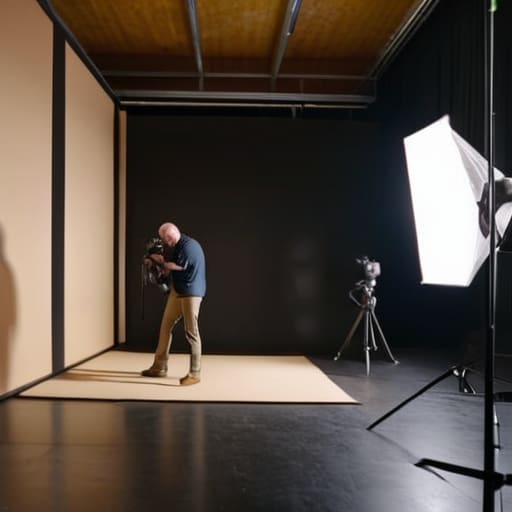
If you’re standing on a set and realize your shot is too tight, don’t start sweating about the math; start looking for more floor space. The biggest mistake I see with newcomers is treating the sensor like a static thing, forgetting that the sensor size impact on field of view is a physical reality you have to navigate. If you’re moving from a full-frame rig to an APS-C body, you aren’t just changing a spec sheet; you’re changing your relationship with the room. You’ll find yourself backing up three feet just to get the same head-and-shoulders framing you used to get with ease.
When you’re planning your coverage, stop trying to do the mental gymnastics of calculating effective focal length on the fly. It’ll only slow you down and lead to bad decisions. Instead, build a mental shorthand for your kit. If you know your sensor has a 1.5x crop, treat your 50mm like an 75mm. It’s much easier to plan for a tighter perspective from the start than to realize mid-take that you’ve accidentally shot a tight close-up when you needed a wide master.
Common Mistakes to Avoid
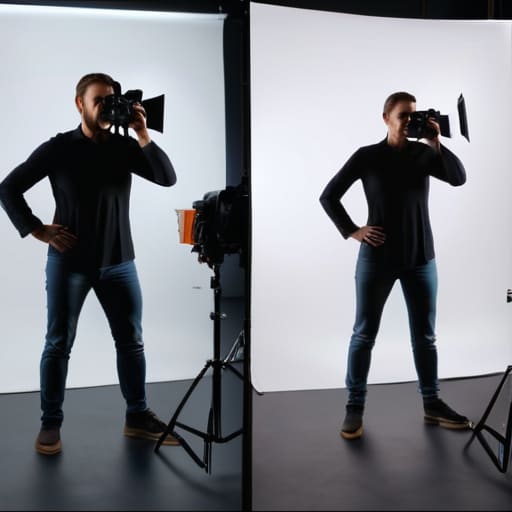
The biggest mistake I see is people treating a lens’s focal length like a fixed truth, rather than a relationship between glass and a sensor. You’ll see a kid show up on set with a 50mm, thinking they’ve got a standard wide-normal shot, only to realize they’ve actually brought a portrait lens because they’re shooting on an APS-C body. They didn’t account for the sensor size impact on field of view, and now they’re backed up against a wall with nowhere to go. It’s not the lens’s fault; it’s a failure to understand the math before the lights are even turned on.
Another trap is the obsession with calculating effective focal length in your head while you’re in the middle of a setup. Don’t do that. If you’re jumping between a full frame body and a crop sensor, stop trying to do mental gymnastics and start looking at the actual framing. People get so caught up in the technicalities of full frame vs aps-c sensor comparisons that they forget to check if the shot actually tells the story. If you don’t know your magnification before you mount the lens, you’re just guessing, and guessing is expensive.
Final Thoughts
At the end of the day, don’t let the math keep you from the frame. If you spend your entire production worrying about the exact numbers of a full frame vs aps-c sensor comparison, you’re going to miss the light changing through the window or the actor’s eyes softening right before a take. The math is just a tool to help you predict where your edges are going to fall. Once you understand the sensor size impact on field of view, you can stop guessing and start composing with intention.
If you find yourself struggling with a lens that feels too tight, don’t immediately go out and buy a wider prime. Step back. Use your feet. I’ve seen more beautiful shots achieved by a person who knew how to move their tripod than by someone who simply bought a wider sensor to compensate for a lack of space. Equipment is a means to an end, and the end is always the story. Get the coverage you need, learn your gear’s quirks, and then get out of your own way.
Five ways to stop fighting your sensor
- Stop looking at the focal length on the lens barrel and start looking at your feet. If you’re moving from a full-frame rig to a Super 35 body, that 50mm lens isn’t going to give you a 50mm field of view anymore. You need to physically step back to get the same framing you’re used to, or you’re going to spend the whole day frustrated that everything looks like a tight close-up.
- Learn to budget your physical space before you even unbox the tripod. When you’re working with a crop sensor, you lose that wide-angle breathing room. If you’re shooting in a small room with a tight budget, you might find that your “wide” lens suddenly feels like a portrait lens, and you’ll realize too late that you don’t have the physical distance required to pull off the shot.
- Don’t assume your depth of field is going to behave. A common mistake is thinking a crop factor only changes your width; it messes with your perceived depth, too. You’ll find it harder to get that creamy, shallow background look that people obsess over with full-frame sensors, so if you want that look, you’re going to have to work harder with your aperture or find a way to get closer to the subject.
- Watch your lens selection for “specialty” glass. Some lenses are designed specifically for larger sensors and can look soft or vignetted when squeezed onto a smaller crop sensor. It’s not a crime to use them, but if you’re paying for high-end glass, make sure you aren’t wasting its potential by feeding it a sensor that can’t even see the edges of the image.
- Use the crop to your advantage instead of mourning the loss. I’ve seen guys get all worked up about “losing” resolution or field of view, but a smaller sensor can actually be a blessing for certain types of coverage. If you need a tighter, more voyeuristic feel for a documentary segment, don’t fight the crop—embrace the fact that your gear is naturally pushing you into a more intimate perspective.
The Bottom Line
Stop looking at the lens specs in isolation; a 50mm lens doesn’t have a fixed “look” until you know which sensor it’s feeding.
Don’t let the math catch you off guard on set—always account for the tighter field of view before you commit to a lens or a physical position in a cramped room.
You can’t buy your way out of a framing error; if the crop factor makes your shot too tight, no amount of digital zooming or expensive glass will give you the breathing room you actually needed.
The Distance Trap
Stop looking at the spec sheet and start looking at your feet; crop factor isn’t some magical optical transformation, it’s just a reminder that your sensor is smaller than you thought, and if you haven’t accounted for that extra reach before you set up the tripod, you’re going to spend the rest of the shoot wishing you had a bigger room or a longer lens.
Gethin Moreau
The Bottom Line
At the end of the day, crop factor isn’t some mystical property of the glass; it’s just a consequence of how much of that light your sensor actually decides to keep. If you understand that a smaller sensor is going to make your wide lenses feel tighter and your long lenses feel even longer, you’ve already won half the battle. Stop trying to compensate for it by buying more expensive glass or praying for a better sensor. Instead, focus on the physical reality of your space. Know your distances, account for that tighter field of view before you commit to a setup, and remember that coverage is about planning, not about having a lens that can magically undo a bad decision once you’re already on set.
I’ve seen people spend months obsessing over sensor dimensions and millimeter specifications, only to end up with footage that lacks soul because they were too busy looking at a spreadsheet to look at the light. A sensor is just a bucket for photons, and whether that bucket is full-frame or APS-C doesn’t change the fundamental truth of filmmaking: a great image comes from where you stand and how you see the world. Don’t let the math get in the way of the craft. Grab whatever camera you have, find a decent light source, and start shooting. The best gear in the world won’t save a boring composition, but a keen eye will make even a tiny sensor look like cinema.
