I watched a kid on a documentary set last week spend forty minutes wrestling with a motorized stabilizer, sweating through his shirt, only to realize he’d forgotten to check if the light was even hitting his subject. He was so obsessed with the smoothness of the movement that he completely lost the soul of the scene. People treat these devices like magic wands, thinking a steady shot compensates for a lack of intent, but when you’re actually looking at how to choose a gimbal, you shouldn’t be looking at the payload capacity or the latest app integration first. You should be asking if the thing is actually going to get in your way when the sun starts moving.
I’m not here to sell you on the latest piece of plastic that promises “cinematic” results with the push of a button. My goal is to strip away the marketing fluff and talk about how this tool actually lives in your hands during a twelve-hour shoot. I’ll show you how to weigh the trade-offs between weight and stability, and why the best choice is usually the one that lets you focus on the blocking rather than the battery life.
The Illusion of Fluid Motion Why How to Choose a Gimbal Matters
The problem is that most people see a gimbal and think they’ve bought a “cinematic” look. They haven’t. They’ve just bought a way to move through space without tripping over their own feet. Real stabilization for cinematic video isn’t about the electronic wizardry happening inside the motors; it’s about the intention behind the movement. If you’re just walking aimlessly with a stabilized rig, you aren’t making a film, you’re just making a very smooth, very boring home movie.
The real trap lies in the math. You see a sleek piece of kit and assume it’ll handle your setup, but you have to look at the gimbal motor strength and the actual payload limits. I’ve seen too many young operators buy a lightweight rig only to realize halfway through a shoot that their lens choice has pushed the motor to its absolute limit. When those motors struggle, they don’t just vibrate—they fight you. You end up fighting the tool instead of focusing on the blocking or the light. A gimbal should be an extension of your arm, not a weight you’re constantly wrestling.
Weight Capacity Is the Only Truth in 3 Axis Gimbal Technology
You can read every white paper on 3-axis gimbal technology until your eyes bleed, but none of those diagrams will tell you how the motor is going to behave when you actually mount your rig. I’ve seen plenty of operators get seduced by a sleek, lightweight design, only to find out three hours into a shoot that the motors are screaming in agony because they’re fighting a lens that’s just a fraction too heavy. When you’re pushing the limits, gimbal motor strength is the only metric that actually dictates whether your footage is cinematic or just a jittery, high-frequency mess.
If you’re looking at the gap between smartphone vs mirrorless gimbals, the difference isn’t just the size; it’s the physics of the payload. A gimbal might claim to support five pounds, but if your setup is front-heavy due to a matte box or a follow focus, that weight capacity evaporates. You don’t want to be the person constantly re-balancing the axes every time you swap a lens. I always tell people to buy for the rig you want to build, not the one you currently have, because overloading a motor is the fastest way to turn an expensive piece of kit into a very heavy paperweight.
When Gimbal Motor Strength Dictates Your Creative Limits
You can have the most expensive setup in the world, but if your motors are gasping for air, you aren’t a filmmaker; you’re just a person struggling with a vibrating stick. I’ve seen too many newcomers buy a lightweight rig only to realize halfway through a shoot that their lens choice has pushed the gimbal motor strength past its breaking point. When the motors are under constant strain, you get that micro-jitter—that high-frequency buzz that no amount of post-production stabilization can truly fix. It’s a subtle death of the image.
The real danger is the gap between what the spec sheet promises and what the physics of a real production demand. You might be looking at smartphone vs mirrorless gimbals and thinking the smaller one is “easier,” but the physics of inertia don’t care about your comfort. If you’re mounting a heavy body with a cinema prime, you need motors that don’t just hold the weight, but actively fight the momentum of your movement. If the motors are fighting the gear instead of the motion, you’ve already lost the shot.
Smartphone vs Mirrorless Gimbals Choosing Your Specific Tool
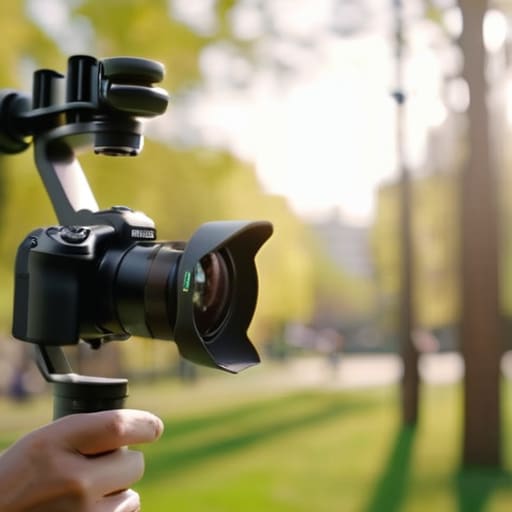
I see people making the mistake of treating these two categories as if they’re playing the same sport. They aren’t. When you’re looking at smartphone vs mirrorless gimbals, you aren’t just choosing a different device; you’re choosing a different philosophy of movement. A smartphone gimbal is a lightweight, agile tool designed for quick, social-media-ready pans and tilts. It’s fine for a walk through a park, but it lacks the sheer physics required to hold anything substantial.
If you move up to a mirrorless setup, the conversation shifts entirely to the mechanical reality of your rig. You have to stop thinking about “features” and start thinking about the physics of your payload. A mirrorless gimbal is built to manage the inertia of a real lens and a sensor that actually has some depth. This is where camera stabilizer weight capacity becomes your new religion. If you buy a stabilizer that is teetering on the edge of its limit just to fit your camera, you’ll spend your entire shoot fighting the motors instead of watching the light. It’s a recipe for jittery, nervous footage that no amount of post-production can smooth out.
Stabilization for Cinematic Video Requires More Than Just Hardware
You can spend six months’ rent on the latest piece of 3-axis gimbal technology, but if you treat it like a magic wand, you’re going to end up with footage that looks like a floating, disconnected dream sequence. There is a massive difference between “stable” and “cinematic.” Stability is just the absence of shake; cinema is the presence of intentionality. If you aren’t thinking about your footwork, your breathing, and how you’re leading the subject through a space, the gimbal is just going to deliver a very smooth, very boring shot of nothing in particular.
Real stabilization for cinematic video comes from the marriage of the tool and the operator’s physical rhythm. I’ve seen kids walk into a shoot with a heavy mirrorless rig and a brand-new stabilizer, thinking the motors will do the work for them. They don’t. You still have to manage the center of gravity, fight the natural sway of your gait, and understand that a gimbal doesn’t replace a steady hand—it just widens the margin for error. If you don’t learn how to move with the frame, you’re just a person carrying expensive weights.
The Friction of Battery Life for Handheld Stabilizers
There is nothing quite as soul-crushing as being mid-way through a complex tracking shot, finally finding the rhythm of the movement, only to hear that low-battery chirp. You’ve spent an hour blocking the scene, adjusting the light, and making sure the talent is ready, and suddenly your tool becomes a paperweight. When you’re looking at battery life for handheld stabilizers, don’t just look at the number on the box; look at how that number behaves once you’ve actually rigged your setup.
A gimbal might claim ten hours of runtime, but that’s usually measured with a bare camera and no accessories. Once you add a matte box, a wireless follow focus, or even just a slightly heavier lens, those motors have to work harder, and that power drain accelerates. If you are navigating the jump between smartphone vs mirrorless gimbals, remember that the stakes change. On a phone, a dead battery is an inconvenience; on a mirrorless rig, it’s a production halt. I’ve learned the hard way to always carry more juice than I think I need, because the best shot of the day rarely happens when your battery is full.
Five ways to stop fighting your gear and start moving with it
- Stop looking at the payload maximum and start looking at the “sweet spot.” If a gimbal says it can hold 10lbs, it’ll likely struggle and jitter once you hit 7lbs. You want a motor that isn’t working at its absolute limit just to keep your camera level; you need headroom so the motors can actually react to a sudden step or a gust of wind.
- Check the physical footprint of the mounting plate. I’ve seen too many young shooters buy a high-spec gimbal only to realize they can’t tilt the camera down far enough because the lens is hitting the gimbal arm. If you can’t get a low-angle shot without the whole rig looking like it’s having a seizure, the gimbal is useless to you.
- Prioritize the interface over the app. You’ll be in the field, likely in bad light or under pressure, and the last thing you want to do is fumble with a smartphone screen to adjust a follow-focus setting. If the gimbal has physical dials or a reliable touchscreen that doesn’t lag, it’s worth the extra few hundred dollars.
- Test the balance before you even turn the power on. A gimbal is just a very expensive, motorized way to hold a balanced object. If you can’t achieve a perfect, static balance with the camera and lens attached while the power is off, you’re going to spend your entire shoot fighting the motors instead of focusing on your composition.
- Don’t ignore the weight of the rig itself. A gimbal isn’t just the weight of the camera; it’s the weight of the camera, the lens, the matte box, the follow focus, and your own tired arms. If the stabilizer is too heavy for you to carry for a four-hour shoot, it doesn’t matter how smooth the footage is—you won’t be able to hold the shot long enough to make it count.
The bottom line
Stop shopping for the lightest gimbal and start shopping for the one that can actually carry your rig without the motors screaming for mercy.
A gimbal is a tool for movement, not a replacement for a steady hand or a sense of rhythm; if you don’t know how to walk, the tech won’t help you.
Build your setup around the camera you actually own and the glass you intend to use, because a gimbal that’s “good on paper” is useless if it can’t balance your specific kit.
The math of the motor
Stop looking at the marketing brochures and start looking at your kit bag. A gimbal isn’t a magic wand that makes movement look professional; it’s a mechanical weight-balancer that will fight you every inch of the way if you buy one based on a spec sheet instead of the actual physical reality of your lens and camera combo.
Gethin Moreau
Beyond the Spec Sheet
At the end of the day, choosing a gimbal isn’t about finding the one with the most axes or the prettiest marketing brochure. It’s about understanding the physical reality of your kit. You need to know if the motors can actually fight the inertia of your glass, if the battery will die halfway through a crucial sequence, and whether the weight on your arms will turn a three-minute shot into a two-minute nightmare. If you ignore the payload capacity or the specific needs of your sensor, you aren’t buying a tool; you’re buying a expensive paperweight that will only frustrate you when the light starts to fail. Focus on the mechanical limits of the hardware, because once you hit them, there is no software update in the world that can fix a motor stalling mid-pan.
But even once you’ve picked the right rig, remember that the gimbal is just a way to move through space, not a way to create meaning. A perfectly stabilized shot that lacks intention is just a floating, lifeless window into nothing. Don’t let the smoothness of the movement trick you into thinking the work is finished. Use the tech to serve the story, to find the rhythm of the scene, and to get closer to the action in ways a tripod never could. The best movement is invisible, and the most important part of your setup will always be the eye behind the monitor, deciding exactly where that camera needs to go.
