
I spent most of the nineties lugging heavy tripods through mud and praying the dolly tracks wouldn’t catch on a stray pebble, back when “smooth” meant you hadn’t tripped over a power cable. Now, I watch kids walk onto a set with a motorized stabilizer and a look of pure confidence, convinced they’ve mastered the art of movement. There is this pervasive, exhausting myth that how gimbals changed shooting is synonymous with making every shot look professional. It isn’t. A gimbal can give you a perfectly level, buttery-smooth path through a room, but if you’re using that stability to mask lazy composition or a total lack of intentionality, you aren’t making cinema—you’re just making a very expensive home movie.
I’m not here to sell you on the latest carbon-fiber toy or tell you that a stabilizer is a magic wand for bad technique. What I want to do is strip away the marketing fluff and talk about the actual workflow shifts—the way these tools change how we block a scene and where we place our lights to accommodate a moving camera. I’ll tell you when a gimbal is a legitimate tool that expands your visual language, and when it’s just a way to hide the fact that you don’t know where to put the camera.
The Illusion of Fluidity How Gimbals Changed Shooting
The problem with the modern obsession with stabilization is that we’ve started confusing “smooth” with “meaningful.” In the old days, if you wanted a moving shot, you either leaned on a dolly or you accepted the grit of handheld footage. There was a kinetic energy to it—a sense that the camera was a character in the room. Now, everyone wants that floating, ethereal glide. But let me tell you, a gimbal can make a shot look professional, but it can also make it look soulless. If you’re just drifting through a room without a reason, you aren’t using cinematic camera movement techniques; you’re just taking a very expensive, very stabilized stroll.
The real impact of stabilization on storytelling isn’t about removing shake; it’s about the intention behind the motion. When I see a novice operator using a gimbal, they often forget that the movement needs to serve the blocking. They treat the tool like a magic wand that fixes bad direction. But the truth is, the evolution of videography tools has actually made it easier to be lazy. A gimbal vs tripod usage debate is almost irrelevant if you don’t understand that motion must have a motive. If the camera isn’t moving because the story demands it, you’re just adding expensive noise to a silent scene.
The Death of the Static Frame and the Evolution of Videography Tools
Before the era of cheap, lightweight motors, if you wanted a moving shot, you either committed to the grit of handheld or you lugged a heavy-duty dolly through the mud. There was a certain honesty in that choice. You either leaned into the nervous, breathing energy of handheld vs stabilized footage, or you spent three hours leveling a tripod to ensure the frame didn’t drift a millimeter. Now, the evolution of videography tools has given everyone the ability to glide through a room like a ghost, but we’ve lost something in the transition. We’ve traded the intentionality of a fixed frame for a constant, restless wandering.
The problem I see most often isn’t the tech itself, but the way it’s used to mask a lack of direction. People think a motorized stabilizer is a substitute for blocking, but a floating camera that doesn’t know where it’s going is just a distraction. When you move away from the tripod, you aren’t just changing how the camera stays still; you are changing the impact of stabilization on storytelling. If the movement doesn’t serve the character or the tension, you aren’t making cinema—you’re just making a very expensive, very smooth tour of a room.
Handheld vs Stabilized Footage When Movement Actually Serves the Story
The real debate isn’t about which look is better, but about what that movement is actually communicating to the audience. When I’m deciding between handheld vs stabilized footage, I’m not thinking about the spec sheet; I’m thinking about the character’s pulse. Handheld is visceral. It’s got a nervous energy, a slight tremor that tells the viewer something is unsettled or urgent. If you’re shooting a tense conversation in a cramped kitchen, that organic shake provides a sense of presence that a perfectly level horizon simply cannot replicate.
On the flip side, you use a stabilizer when the world needs to feel inevitable or dreamlike. Smooth motion cinematography isn’t just about removing shake; it’s about creating a specific kind of grace. But here is where people trip up: they use a gimbal because they think it makes them look professional, when in reality, they’re just masking a lack of intentionality. If the camera is gliding through a room but the lighting is flat and the blocking is stagnant, you haven’t made a cinematic shot—you’ve just made a very smooth, very boring one.
Beyond the Glide Mastering Cinematic Camera Movement Techniques
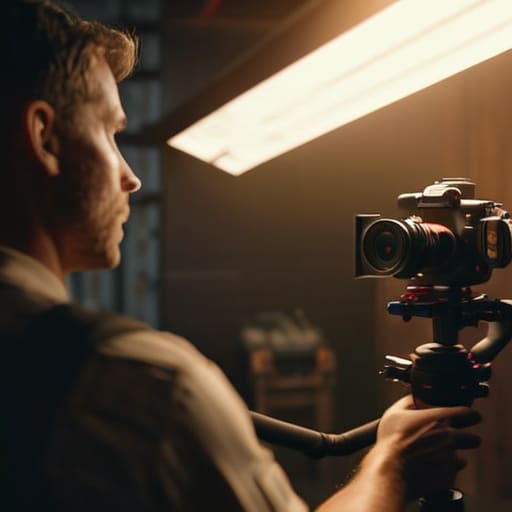
If you think a gimbal is a magic wand that turns a wandering amateur into a cinematographer, you’re in for a rude awakening. Real cinematic camera movement techniques aren’t about the absence of shake; they are about the intent behind the motion. A gimbal allows you to move through a space, yes, but if you don’t understand how that movement interacts with your subject and the light, you’re just making a very expensive, very smooth tour of a room. I’ve seen more ruined scenes by a motorized stabilizer moving with no rhythm than by a shaky operator with a clear sense of the beat.
The real trick is knowing when to lean into the tech and when to fight it. There is a massive difference between the robotic, floating sensation of a stabilizer and the organic weight of a well-executed dolly shot. You have to learn how to marry your movement to the blocking. If your character is moving left to right, your camera shouldn’t just be “tracking” them like a mindless drone; it needs to feel like it has a reason to be there. It’s about the marriage of physics and feeling, not just hitting a button to engage a motor.
The Precision Trap Gimbal vs Tripod Usage in Real Scenes
I’ve sat on sets where a kid with a brand-new Ronin was doing circles around a veteran with a tripod, thinking he was “improving” the shot. He wasn’t. He was just adding movement where none was required. The biggest mistake I see in the current era of gimbal vs tripod usage is the assumption that movement equals progress. A tripod isn’t a relic; it’s a choice. It provides a level of intentionality and structural weight that a motorized stabilizer simply cannot mimic. When you’re shooting a conversation where the subtext is in the stillness, a gimbal can actually feel intrusive, pulling the viewer out of the moment with its unnatural, floating perfection.
The real skill lies in knowing when the machine is working for you and when it’s just working against the scene. There is a specific kind of tension you can only get from a fixed frame, a sense of being an observer rather than a participant. If you use a gimbal to chase every subject through every doorway, you lose the ability to let the audience breathe. True cinematic intent comes from knowing when to lock the frame down and when to let the camera wander.
Achieving Smooth Motion Cinematography Without Losing the Human Element
The danger with modern stabilization is that it can strip the life right out of a scene. When everything is perfectly leveled and gliding on an axis that feels mathematical rather than physical, you lose that subconscious connection to the character’s breathing or the tension in a room. I’ve seen too many productions where the impact of stabilization on storytelling is purely negative—the footage looks “expensive,” but it feels sterile, like a floating ghost is watching the action instead of a person. To avoid this, you have to remember that movement should be a reaction to the performance, not just a way to show off your gear.
If you want to master smooth motion cinematography without turning your film into a tech demo, you need to introduce controlled imperfection. Sometimes that means letting a tiny bit of natural micro-jitter bleed through, or using a gimbal to mimic a slow, intentional dolly move rather than a frantic, sweeping arc. It’s about finding the middle ground between the rigidity of a tripod and the chaos of a run-and-gun handheld setup. The goal isn’t to eliminate movement; it’s to make the movement feel earned.
Five Ways to Stop Using a Gimbal Like a Toy
- Stop moving just because you can. The biggest mistake I see with these rigs is the “floating” shot that never ends—a slow, aimless drift that tells the audience absolutely nothing. If the light is coming from a window to your left and the subject is seated, there is rarely a reason to orbit them like a satellite. Move because the story demands a shift in perspective, not because you’ve spent three grand to eliminate all friction.
- Respect the light, even when you’re on the move. When I was shooting on film, you thought about your light before you even touched the tripod. Now, people whip a gimbal around a room and realize too late that their moving camera has just plunged the subject into a shadow or blown out a backlight. A gimbal doesn’t give you more light; it just moves you through the light you already have. Plan your path based on the lamps, not the joystick.
- Learn to embrace the “micro-shake.” There is a certain clinical, sterile quality to gimbal footage that can feel dead. Sometimes, a shot needs a bit of weight, a bit of human breathing. If you’re shooting a high-stakes interview or something intimate, don’t be afraid to take the rig off and go handheld, or at least use the gimbal’s settings to allow for a little organic imperfection. Perfection is often the enemy of feeling.
- Don’t forget about the floor. In the old days, we’d use a dolly or a slider because we knew the physics of a smooth track. With a gimbal, people get lazy with their footing. You can have the most expensive Ronin or Crane on the market, but if your operator is walking like they’re on ice or tripping over a sandbag, the footage will look amateur. Your feet are part of the camera movement; treat them with the same respect you give the lens.
- Coverage is still king. I see young shooters get so caught up in the “hero shot”—that sweeping, stabilized gimbal move—that they forget to get the basics. You still need your wide masters, your clean medium shots, and your tight close-ups. A gimbal is a tool for specific moments, not a replacement for a well-structured shot list. If you don’t have the static coverage to cut to, your fancy movement is just a very expensive way to fail in the edit.
The Bottom Line
Movement is a choice, not a default; use a gimbal because the scene demands a specific kinetic energy, not because you’re too lazy to find a steady footing or a tripod.
Stability is not a substitute for composition; a perfectly smooth shot of a poorly lit, poorly blocked scene is just high-definition garbage.
Technology should serve the edit; if your movement is so constant and mechanical that it offers no rhythm or breathing room, you aren’t making cinema, you’re just making a moving slideshow.
The False Promise of the Smooth Shot
We’ve traded the character of a well-timed handheld sway for a clinical, floating smoothness that often tells us nothing about the scene. A gimbal can give you a steady path, but it won’t give you a reason to walk it; if you haven’t figured out where the light hits the subject or why the camera needs to move in the first place, you’re just delivering a very expensive, very stable shot of nothing.
Gethin Moreau
The Tool is Not the Talent
We’ve spent this time dissecting the mechanics, the movement, and the pitfalls of the stabilized era, but it all boils down to a simple truth: a gimbal is just a motorized way to move a camera from point A to point B. It can give you that floating, dreamlike glide, and it can certainly save you from the shaky, unwatchable mess of a novice with a heavy rig, but it cannot manufacture intentionality. If you use a stabilizer to mask a lack of blocking or to fly through a room that has no visual interest, you aren’t making cinema; you’re just making a very expensive, very smooth tour of nothing. The gear has changed the way we move, but it hasn’t changed the fact that every single pan, tilt, and track must serve the story.
At the end of the day, don’t let the tech seduce you into thinking the work is done once the horizon line is level. I’ve seen shots on a battered tripod that moved me to tears, and I’ve seen $50,000 rigs producing footage that felt utterly hollow. The magic doesn’t live in the brushless motors or the software algorithms; it lives in the way you see the light hitting a subject and the way you choose to approach them. Put the gimbal down when the scene needs stillness, and pick it up when the movement actually means something. Master the light and the composition first, and the gear will eventually stop being a distraction and start being what it was always meant to be: a quiet servant to your vision.
