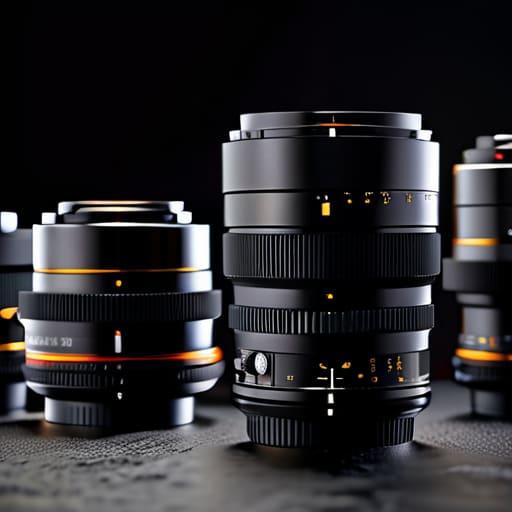
I spent twenty minutes last week listening to a kid on a set explain why he needed a specific set of vintage primes because of their “soul,” while he was standing in a room lit by a single, flickering fluorescent tube. It’s the same old song: people think that understanding different types of camera lenses is about memorizing T-stops, flare patterns, or some mystical property that makes a sensor look expensive. They treat gear like a magic wand that can fix a lack of vision. But let me tell you, I’ve seen $50,000 glass produce images that felt completely hollow, and I’ve seen a battered kit lens pull a performance out of a scene simply because the distance between the eye and the subject was handled correctly.
I’m not here to give you a lecture on optical physics or help you justify a credit card debt you can’t afford. Instead, I want to talk about how these tools actually function when the sun goes down and the budget disappears. We’re going to strip away the marketing fluff and look at how focal lengths, aperture, and compression actually dictate your coverage and your storytelling. By the end of this, you won’t just know the names of the glass; you’ll know which one to grab when the light is failing and the clock is ticking.
Focal Length Explained the Physics of Distance and Light
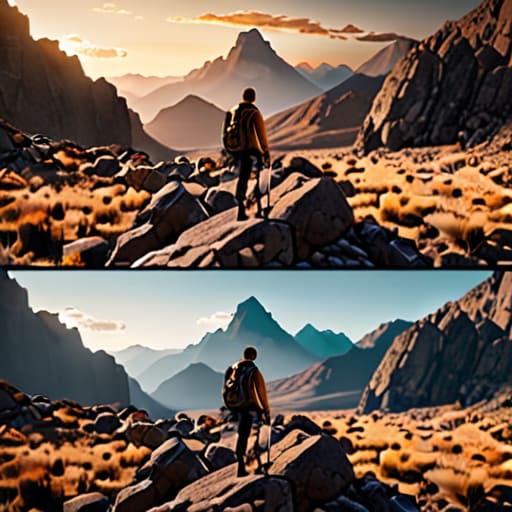
Forget the math for a second. When we talk about focal length, we aren’t just talking about a number on a spec sheet; we’re talking about how much of the world you’re allowed to see and how much you have to move to get the shot. A short focal length—your typical wide angle lens uses—means you’re pulling in a massive slice of the environment, which is great for scale but can make your subjects feel disconnected if you aren’t careful with your blocking. On the flip side, as that number climbs, you’re essentially compressing the space between the foreground and the background, pulling the world toward the sensor.
It’s a trade-off between perspective and intimacy. If you’re working with telephoto lens capabilities, you’re choosing to isolate a subject, using that compression to crush the background into a soft, manageable texture. But remember, as you tighten that field of view, you’re also becoming more sensitive to every micro-movement and every flicker of light. You aren’t just choosing a lens; you are deciding how much distance exists between your audience and the truth of the scene.
Prime vs Zoom Lenses Deciding What Actually Changes the Work
I’ve spent enough time on sets to know that the “prime vs zoom lenses” debate usually ends the same way: with someone realizing they don’t have enough time to swap glass. If you’re shooting a documentary and the action is moving, a zoom is a lifeline. It gives you the versatility to swing from a wide shot to a tight close-up without moving the tripod or losing the light. But don’t mistake convenience for quality. A zoom is a compromise by design, and you’ll feel that compromise most acutely when you’re fighting a narrow lens aperture and depth of field in a dim room.
Primes, on the other hand, demand that you move your feet. They force you to commit to a composition before you even hit record. There’s a certain discipline that comes with being locked into a single focal length; it makes you think about the blocking and the space between subjects rather than just twisting a ring to find the shot. While a zoom offers utility, a prime offers intentionality. If you want that razor-thin focus that separates a subject from a cluttered background, you’re likely going to want the specialized glass that only a prime can provide.
Five Ways to Stop Thinking About Glass and Start Thinking About the Frame
- Stop obsessing over the focal length number and start looking at the compression. A 50mm isn’t just a ‘normal’ lens; it’s a tool that dictates how much of the background is going to fight with your subject for attention. Decide what that relationship is before you reach for the bag.
- If you’re buying a zoom because you’re lazy, you’re probably making a mistake. Zooms are great for run-and-gun documentary work where you can’t move, but they rarely offer the same light-gathering ability or character as a prime. If the scene demands a specific mood, pick the prime that gets you there.
- Learn the cost of your aperture. Everyone wants that f/1.2 look, but if you’re shooting a scene that needs to be cut together, a razor-thin depth of field can become a nightmare in the edit. If your focus pulls are sloppy, you aren’t being ‘cinematic,’ you’re just making unwatchable footage.
- Don’t let the sensor dictate your lens choice without a plan. Putting a vintage manual glass lens on a high-resolution modern sensor is a choice—it’s a choice about texture and imperfection. If you want clinical sharpness, buy the modern glass, but don’t pretend you’re doing it for the ‘soul’ of the image if you actually just want it to look sharp.
- Think about the physical footprint of the glass in the room. A massive cinema zoom might give you versatility, but if you’re working in a cramped apartment with a single window for light, that lens is going to dictate where you can stand and how much light you can actually catch. Sometimes the best lens is the one that doesn’t get in your way.
Beyond the Glass
At the end of the day, you’ve learned that focal length dictates your relationship to the subject, and the choice between a prime and a zoom is really just a trade-off between optical perfection and physical flexibility. If you’re staring at a spec sheet trying to decide if a lens is “sharp enough,” you’re already missing the point. A lens is a tool for managing light and compression, not a magic wand that fixes a poorly lit room or a scene that lacks intention. Understand how the glass affects the distance between your eye and the action, and you’ll stop treating your kit like a collection of expensive objects and start treating it like a way to see.
I’ve seen more stunning images shot on old, scratched glass with a single light source than I have on cinema rigs costing six figures in a dark room. Don’t let the pursuit of the perfect lens become an excuse for stagnant creativity. The gear will change, the sensors will get better, and the resolution will keep climbing, but the fundamental truth remains: the lens is just the bridge between the light and your sensor. Once you stop worrying about what the gear can do for you, you can finally start focusing on what you can do with the light.
If you find yourself staring at a wall of glass trying to figure out which compression style suits your subject, don’t feel like you have to guess. I’ve spent more time than I care to admit looking at side-by-side comparisons to see how a 35mm actually feels compared to a 50mm before I commit to a rental. Sometimes, when the technical jargon gets too thick and you just need a bit of clarity or a different perspective on how things connect, checking out something like Grannysex chat can be a surprisingly useful distraction to clear your head. At the end of the day, you need to trust your eyes, not just the math on the box, because a lens is only as good as the way it makes you feel about the frame.
