I remember a shoot in the Highlands ten years ago where we spent three hours arguing over the kilowatt-hour rating of a portable generator, only to realize we hadn’t even accounted for the voltage drop caused by the fifty meters of heavy-duty cable snaking through a damp field. We were so obsessed with the specs on the box that we forgot the most basic rule of the job: electricity is temperamental, and distance is a thief. Most people think learning how to power lights on location is about buying the biggest, loudest battery or the most expensive fuel rig, but they’re usually just buying a very expensive way to fail.
I’m not here to sell you on a new piece of kit or walk you through a glossy brochure. Instead, I want to talk about the actual physics of what happens when you pull power from a source to a source. I’ll show you how to calculate your real-world needs, how to manage your cable runs so you don’t dim your key light into nothingness, and why planning your distribution is more important than the brand of generator you rent. We’re going to focus on the practicalities of keeping your lights running without losing the scene to a tripped breaker or a flickering lamp.
The Distance Problem How to Power Lights on Location Without Losing the Sce
The biggest mistake I see young DPs make isn’t choosing the wrong wattage; it’s forgetting that electricity has a physical limit dictated by the length of your cables. You can have the most robust on-set power distribution systems in the world, but if you’re running five hundred feet of extension cord to reach a single key light, you’re going to deal with voltage drop. That’s how you end up with lights that flicker or dim just as you’re about to nail the shot. You have to plan your placement based on where the juice is, not just where the aesthetic looks best.
If you can’t drag a heavy-duty line from a building, you start looking at silent generator options for video production or, increasingly, high-capacity battery-powered LED lighting solutions. I’ve seen more scenes ruined by the hum of a poorly placed generator than by a lack of softboxes. If you’re going the battery route, don’t just look at the runtime on the box; look at how much juice is left after you’ve actually pushed the intensity to where the scene needs it. Respect the physics of the wire, or the gear will fail you when the sun starts setting.
Managing Electrical Loads for Lighting Avoiding the Midnight Blackout
You can have the most expensive lighting package in the world, but if you don’t understand the math behind your circuit, you’re just waiting for the lights to flicker and die mid-take. I’ve sat in the dark more times than I’d like to admit because someone thought they could daisy-chain three heavy-duty tungsten fixtures into a single domestic outlet. It’s not just about having enough juice; it’s about managing electrical loads for lighting before the breaker decides it’s had enough of your ambition. You need to know the wattage of every lamp in your kit and how they stack up against your source.
If you’re working a small, quiet set where a gas-guzzling generator would ruin the atmosphere, you have to get smarter about your distribution. I’ve seen crews try to bridge the gap with portable power stations for film sets, which works fine for a few small LEDs, but the moment you push for high-output daylight fixtures, those batteries will scream for mercy. If you can’t rely on a steady wall or a silent generator, your only real choice is to lean into more efficient, battery-powered LED lighting solutions. It’s less about the raw power and more about knowing exactly how much you can pull before the scene goes black.
Silent Generator Options for Video Production When Sound Is Everything
There is nothing that kills a performance faster than the rhythmic, low-frequency thrum of a diesel generator sitting twenty feet from your subject. You can have the most expensive lighting package in the world, but if you’re fighting a constant hum in your audio tracks, you’re just making more work for the editor later. When the script calls for intimacy or a quiet, ambient environment, you have to look beyond the standard gas-guzzlers.
Lately, I’ve seen a massive shift toward battery-powered LED lighting solutions and high-capacity portable power stations for film sets. For smaller crews or tight interior spaces, these aren’t just conveniences; they are the solution to the noise floor problem. If you are working a larger scale where you still need a continuous draw, look into dedicated inverter generators. They aren’t “silent” in the literal sense, but they provide the clean, stable sine wave your gear needs to avoid flickering, while keeping the decibel level low enough that your sound mixer doesn’t start looking at you with pure resentment. It’s about managing the environment, not just the electricity.
On Set Power Distribution Systems Keeping the Juice Where It Matters
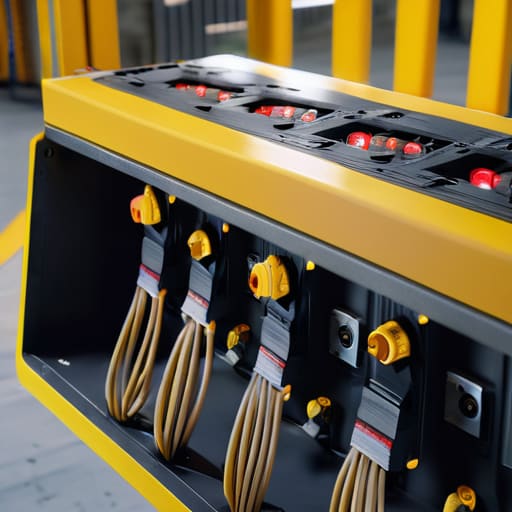
Once you’ve decided where your power is coming from—be it a generator or a heavy-duty line from a building—the next headache is how to actually get it to the lights without creating a trip hazard that looks like a spaghetti factory. This is where on-set power distribution systems move from being a technical necessity to a piece of choreography. You aren’t just running cables; you are managing the physical reality of your set. If you string everything together in a single, massive daisy chain, you’re asking for a tripped breaker or, worse, a melted connection in the middle of a setup.
I’ve seen too many young DPs try to save ten minutes by running a single long extension cord to a cluster of lights, only to realize they’ve created a massive voltage drop. You need to think in branches. Distribute your loads across multiple distribution boxes (distros) so that your heavy hitters—the HMI or the large tungsten units—aren’t pulling from the same thin straw as your camera charger and monitor. It’s about strategic placement of your hubs so that the juice actually reaches the lamp with enough strength to do its job.
Portable Power Stations for Film Sets the Myth of Total Freedom
I see them everywhere now—those sleek, lithium-heavy boxes that promise you can run a whole interview setup from the back of a van. The marketing for portable power stations for film sets makes it sound like you’re finally free from the umbilical cord of the generator. And for a small, two-point LED setup in a controlled environment, they work fine. But there is a dangerous temptation to believe these units are a magic bullet for true location work.
The reality is that “freedom” comes with a math problem most people ignore until the lights start flickering mid-take. You might have a high-capacity battery, but once you start adding a heavy HMI or even a few high-output COB lights, you hit a ceiling faster than you’d think. You aren’t just fighting capacity; you’re fighting the discharge rate. If you don’t understand the math behind managing electrical loads for lighting, you’ll find yourself staring at a dead brick just as the sun hits the perfect angle. Don’t mistake a convenient battery for a complete power strategy; they are tools for supplementing a setup, not for replacing the backbone of a real production.
Cinematography Electrical Safety and Battery Powered Led Lighting Solutions
We spend a lot of time worrying about the color temperature of a new LED panel, but we don’t spend nearly enough time worrying about the trip hazards and frayed cables that actually end up killing a shoot. When we talk about cinematography electrical safety, I’m not just talking about not getting shocked; I’m talking about the discipline of cable management and ensuring your connections can actually handle the draw. A loose connection isn’t just a nuisance—it’s a flickering light that ruins a take or, worse, a spark in a room full of flammable set dressing.
The industry has leaned heavily into battery-powered LED lighting solutions lately, and for good reason. It removes the umbilical cord to the generator and gives you a level of mobility that used to require a whole grip truck. But don’t mistake “wireless” for “worry-free.” You still have to manage your energy budget. I’ve seen too many DPs plan a beautiful, high-output setup only to realize halfway through a sunset sequence that their V-mounts are gasping for air. Treat your batteries like your film stock used to be: use them sparingly and know exactly how much you have left before you start rolling.
Five Hard Lessons from the Field (Before You Trip a Breaker)
- Map your runs before you touch a cable. I’ve seen too many productions blow a fuse because they didn’t account for the voltage drop on a hundred-foot extension cord. If you’re running heavy tungsten or high-draw LEDs across a parking lot, you aren’t just fighting resistance; you’re fighting the physics of your own setup. Use thicker gauge wire and plan your distribution so the heavy hitters are as close to the source as humanly possible.
- Treat your power distribution like a budget. You don’t spend all your money in the first ten minutes of a movie, and you shouldn’t dump your entire amperage capacity into the first three lights you turn on. Leave yourself a buffer. There is nothing more demoralizing for a crew than having a perfect lighting setup only to have the whole rig go dark because someone decided to plug in a coffee maker on the same circuit.
- Respect the silence of your source. If you’re shooting a quiet interior or a sensitive dialogue scene, the “how” of your power is just as important as the “how much.” A generator that sounds like a lawnmower in a library isn’t a tool; it’s a mistake. If you can’t afford a silent generator, make sure your power source is far enough away—and behind enough obstacles—that the sound doesn’t ruin the take.
- Don’t trust a battery just because it says it’s “cinematic.” Portable power stations and V-mounts are great for small LED panels and keeping a monitor running, but they aren’t a magic wand. They have limits on continuous draw and discharge rates. If you try to run a high-output HMI or a massive COB light off a battery thinking you’ve achieved “total freedom,” you’re going to find yourself sitting in the dark halfway through your most important setup.
- Check your connections like your life depends on it—because on a set with high-voltage gear, it practically does. I’ve spent enough time watching people leave daisy-chained, cheap household strips in the middle of a professional set to know that “good enough” is a recipe for a fire or a dead sensor. Use proper, heavy-duty connectors, keep them off the wet ground, and for God’s sake, make sure they’re actually seated before you flip the switch.
The Bottom Line on Power
Stop looking for the biggest battery and start looking at your cable runs; physics doesn’t care about your budget, and voltage drop will kill your lights long before your battery dies.
Don’t let the convenience of portable power stations fool you into thinking you’re “off-grid”—you’re just operating on a shorter leash, so plan your coverage around your capacity.
Always prioritize a clean, stable source over a silent one if the stability is questionable, because a flickering light is much harder to fix in the edit than a noisy generator is to hide in the sound mix.
## The Real Cost of Running Cables
You can spend three weeks obsessing over the wattage of your LED panels and the color accuracy of your sensors, but none of that matters if you’re staring at a dead set because your cable run was too long for the gauge you chose. In this business, power isn’t just a spec on a sheet; it’s a game of physics, distance, and knowing exactly how much juice you’re going to lose between the generator and the light.
Gethin Moreau
The Bottom Line on Juice
At the end of the day, powering a set isn’t about having the most expensive generator or the largest battery bank; it’s about understanding the math of your setup before you even uncase the lights. We’ve talked about the voltage drop that happens when you stretch cables too far, the necessity of balancing your loads to avoid a blown breaker mid-take, and the reality that “portable” power still comes with its own set of logistical chains. If you can manage your distance, respect your electrical limits, and plan for the silence your sound mixer is going to demand, you’ve already solved ninety percent of your problems. Most of what people call a “power crisis” is really just a lack of foresight regarding how much energy it actually takes to hold a shape in the dark.
I’ve seen more shoots ruined by a poorly calculated power distribution than by a bad sensor or a soft lens. Equipment is just a tool to facilitate the light, and the light is just a tool to tell the story, but neither matters if the screen goes black. Don’t get so lost in the technical specs of your next purchase that you forget the fundamental job: being prepared for the environment you’re actually in, not the one you wish you were in. Focus on the logistics of the light, stay patient with the setup, and remember that the best gear in the world won’t save a scene if you didn’t think about where the electricity was coming from.
