I remember a shoot in a damp basement in Bristol, twenty years ago, where we were running on nothing but lukewarm tea and a prayer. The lighting was a single, sickly tungsten source coming from a corner that felt like it was shrinking by the minute, and the actor was moving with a nervous energy that made my heart sink. I watched the junior assistant try to explain to the director that they needed a wireless follow-focus system with a high-torque motor to save the shot. It was nonsense. People think they can buy their way out of a technical failure, but understanding how focus pulling works isn’t about the motorized gear on your rails; it’s about the relationship between the lens and the space the actor occupies.
I’m not here to sell you a spec sheet or a brand-new wireless kit that you’ll likely break in a month. Instead, I want to talk about the actual mechanics of the craft—the math of distance, the way light affects your perception of depth, and how to anticipate a movement before it even happens. We’re going to strip away the gear-obsessed fluff and focus on the physicality of the pull, so you can stop worrying about your equipment and start focusing on the story.
The Problem of Distance Understanding How Focus Pulling Works

At its core, the mechanic is a simple game of geometry. You are managing the relationship between the sensor, the lens, and the subject, all while fighting the physics of light. When we talk about depth of field cinematography, we’re really talking about how much room for error you actually have. If you’re shooting with a wide aperture to get that creamy, shallow look, your margin for error is practically non-existent. A shift of a few inches can turn a soulful close-up into a blurry mess that no amount of post-production magic can fix.
It isn’t just about turning a knob, though. Effective lens manual focus control requires an understanding of how the glass reacts to distance. You aren’t just looking at the screen; you’re anticipating the movement. This is why we use focus marks for cinematography—to give us a physical roadmap of the scene. You mark the starting point, the peak of the action, and the exit. It’s a rhythmic process. If you miss the mark, you don’t just lose the shot; you lose the emotional beat of the performance.
Predicting the Movement Essential Focus Marks for Cinematography
If you’re waiting for the actor to reach their mark before you start thinking about the lens, you’ve already lost the shot. Real focus pulling isn’t about reacting; it’s about anticipation. On a professional set, we don’t just eyeball the distance and hope for the best. We use focus marks for cinematography—physical indicators, often made with small pieces of tape or marked on a wireless follow focus system—to tell us exactly where the subject needs to be at a specific beat in the performance.
When you’re working with a shallow depth of field, your margin for error is practically zero. You aren’t just turning a knob; you are mapping the geometry of the room. I’ve seen plenty of beginners try to “ride” the focus, trying to adjust in real-time as the actor moves, but that usually results in a jittery, nervous image that pulls the audience right out of the story. Instead, you need to master lens manual focus control by pre-calculating the movement. You mark the start point, the transition, and the destination. It’s about turning a variable movement into a predictable, repeatable mechanical action.
Mastering Lens Manual Focus Control Without Losing the Scene
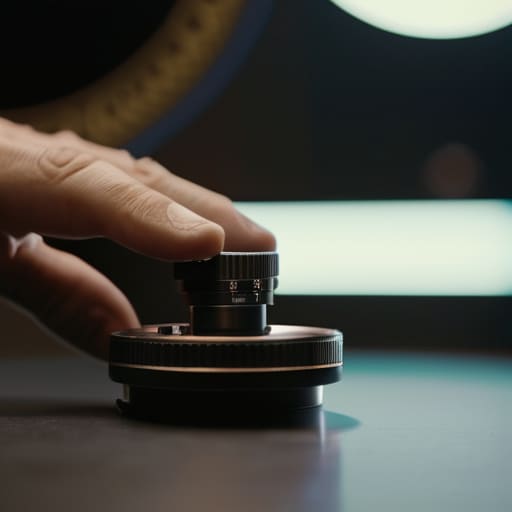
You can have the most expensive wireless follow focus system in the world, but if you don’t understand the relationship between your subject and the plane of sharp focus, you’re just expensive guesswork. Real lens manual focus control isn’t about turning a knob; it’s about rhythm. I’ve spent more time watching an actor move through a space than I have looking at a monitor. You have to anticipate the moment they hit their mark, not react when they’ve already passed it. If you’re waiting for the movement to happen before you engage, you’ve already lost the shot.
In depth of field cinematography, the margin for error shrinks every time you open that aperture. When we’re shooting wide open to get that creamy background, the “sweet spot” becomes a razor’s edge. This is where the actual work happens—it’s a mental exercise in tracking distance. You aren’t just managing glass; you are managing the viewer’s attention. If the focus drifts, the spell is broken, and no amount of post-production sharpening is going to bring the audience back into the story.
The Weight of Responsibility Real Focus Puller Responsibilities
Being a focus puller isn’t just about turning a knob; it’s about being the person who prevents a thousand-dollar minute of performance from being tossed in the bin because the eyes were soft. When you’re pulling focus on set, you aren’t just managing a mechanical device; you are managing the audience’s attention. If the focus drifts, the spell is broken. It doesn’t matter how beautiful the lighting is or how much talent is in front of the lens—if the subject isn’t sharp, the scene is dead.
The actual focus puller responsibilities extend far beyond the technicalities of distance. You have to understand the rhythm of the actors and the intent of the director. You’re constantly calculating how much depth of field cinematography you can afford to play with before the margin for error becomes a liability. It’s a high-stakes game of anticipation where you have to be right every single time, because “we’ll fix it in post” is a lie that even the best colorists can’t always make believable.
Fighting the Blur Depth of Field Cinematography Realities
Everyone wants that creamy, shallow look where the background melts into nothingness, but they often forget that a razor-thin plane of focus is a double-edged sword. In depth of field cinematography, you aren’t just managing what is sharp; you are managing the risk of what isn’t. When you’re shooting wide open at T1.4 to get that cinematic separation, your margin for error disappears. A centimeter of movement from an actor can turn a dramatic close-up into a blurry mess that no amount of post-production magic can fix.
This is where the real pressure of pulling focus on set comes in. It’s not just about turning a knob; it’s about understanding how the light and the lens interact with the space between the subject and the glass. If you’re working with a long lens, that depth of field becomes a tightrope walk. You have to anticipate the physics of the lens, not just the movement of the person. I’ve seen plenty of talented operators get tripped up by it—they focus so hard on the technicality of the pull that they lose sight of the actual performance happening in front of them.
Precision Under Pressure Advanced Follow Focus Techniques
Once you’ve moved past the basics of hitting a mark, you realize that advanced follow focus techniques aren’t about being a human calculator; they’re about rhythm. When you’re pulling focus on set during a complex tracking shot, you aren’t just turning a knob—you’re anticipating the actor’s breath. If they lean in for a whisper, you need to be moving with them, not chasing them like a dog after a car. It’s a dance between the lens manual focus control and the physical energy in the room.
The real pros know that the most difficult part isn’t the distance, but the transition. You have to learn how to “soften” the pull so the shift in focus feels like a natural extension of the storytelling rather than a technical correction. I’ve seen too many beginners treat a rack focus like a binary switch—on or off—but in high-end depth of field cinematography, the velocity of the pull is what separates a professional shot from an amateur one. You want the viewer to feel the shift in attention, not realize someone is turning a wheel.
Five Ways to Stop Chasing the Blur
- Stop looking at the monitor and start looking at the actor. If you’re staring at a tiny screen in a dark tent, you’re reacting to mistakes rather than anticipating them. You need to be watching the physical distance between the lens and the subject’s eyes; the screen tells you when you’ve failed, but the room tells you when you’re about to.
- Trust your marks, but respect the floor. I’ve seen too many pullers rely on a piece of tape on the ground like it’s gospel, forgetting that a performer might take a slightly wider stance or lean into a line. A mark is a suggestion of where the body will be, but the focus stays on the eyes, no matter where the feet land.
- Learn the lens, not just the kit. Every piece of glass has a personality—some have a “breathing” issue where the frame shifts as you rack, and others have a heavy rotation that makes fine adjustments feel like moving a boulder. If you don’t know how your specific glass behaves when you turn that knob, you’re just guessing.
- Use the light to find your plane. If you’re struggling to see where the subject is in a dark room, don’t ask for a better sensor; ask for a rim light or a bounce. Having a bit of definition on the side of a face makes it infinitely easier to judge depth and distance visually before you even touch the follow focus.
- Slow is smooth, and smooth is sharp. The biggest mistake beginners make is trying to “snap” the focus too aggressively. A focus pull should feel like a single, fluid motion, not a series of frantic jerks. If you rush the turn, you’ll overshoot the mark, and no amount of post-production magic is going to fix a soft eye.
The Bottom Line
Focus isn’t a technical setting you toggle; it’s a way of directing the audience’s attention. If the eye isn’t where the story is, the most expensive sensor in the world won’t save the shot.
Stop looking for a gear solution to a shallow depth-of-field problem. You can’t “fix” a soft subject in post, and no amount of autofocus tech replaces the intention of a human hand knowing exactly when a character moves into the light.
Mastery comes from anticipating the scene, not reacting to it. A good puller is thinking three steps ahead of the actor, marking the floor and the light before the camera even starts rolling.
The Illusion of Sharpness
People think focus pulling is about hitting a mark on a scale, but it’s actually about managing the viewer’s attention. If you’re a fraction of an inch off, you haven’t just missed a technical spec; you’ve broken the spell and told the audience to stop looking at the character and start looking at the mistake.
Gethin Moreau
The Final Frame
At the end of the day, focus pulling isn’t about mastering a piece of hardware or obsessing over the latest wireless follow-focus system. It’s about understanding the relationship between the lens, the light, and the person moving through the frame. We’ve talked about marks, depth of field, and the sheer pressure of keeping a shot sharp when a performer decides to take an extra step toward the camera. But if you strip away the technical jargon, what you’re really doing is protecting the narrative. You are ensuring that when the audience looks at the screen, they see the emotion intended, rather than a soft, distracting blur that pulls them right out of the story.
If you’re just starting out, don’t let the gear intimidate you. I’ve seen incredible work shot on old glass with nothing but a hand on a lens, and I’ve seen expensive rigs fail because the operator wasn’t watching the actor’s eyes. Focus is the invisible thread that ties a scene together; get it right, and the audience won’t even notice it’s there. Get it wrong, and they’ll notice nothing else. So, stop worrying about the specs for a moment and start watching the movement. Learn the rhythm of your actors and the limitations of your light. That is where the real craft lives.
