I spent three weeks on a documentary in the Highlands once, lugging a kit that cost more than my first house, only to realize the footage looked like amateur hour because I’d ignored the way the sun was hitting the treeline. I watched a kid on a budget smartphone deliver a shot that had more soul and texture than my entire rig, simply because he knew how to sit in a window’s light. Everyone is out there chasing the latest spec sheet, convinced that the best ways to record high quality video involve upgrading to a dual-native ISO sensor or buying a lens that costs a year’s rent. But let me tell you something: you can buy the most expensive sensor on the market, but if you don’t understand how to manage your distance from the subject or control your shadows, you’re just recording expensive garbage.
I’m not here to sell you a dream or a gear list that makes your credit card weep. My goal is to strip away the marketing fluff and talk about the things that actually show up in the final cut: light, blocking, and the discipline of coverage. I’m going to show you how to stop chasing resolution and start chasing intentionality. We’ll cover how to use what you have to create depth, why your position in the room matters more than your frame rate, and how to make a scene look professional without needing a grip truck parked outside your door.
Mastering Professional Video Lighting Setups and Distance
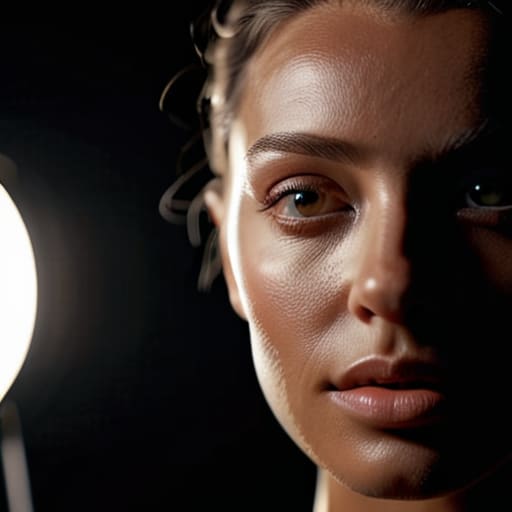
You can spend sixty thousand dollars on a cinema rig, but if your key light is hitting your subject like a fluorescent tube in a hospital hallway, you’ve wasted your money. I’ve seen kids walk onto sets with the latest Sony or RED, thinking the sensor will do the heavy lifting, only to produce footage that looks flat, muddy, and amateur. The truth is that professional video lighting setups aren’t about how many fixtures you have; they’re about the direction and the quality of the light. If you aren’t thinking about the fall-off or how the shadows define the shape of a face, you aren’t filming, you’re just documenting.
Distance is the other thing people forget once they get distracted by a spec sheet. If you’re too close to your subject with a wide lens, you’re going to get that distorted, unflattering look that no amount of color grading can fix. I always tell my assistants to manage the space before they even touch the tripod. It’s about the relationship between the light source, the subject, and the lens. If you master that triangle, you’re already ahead of ninety percent of the people currently chasing the latest gear.
A Cinematic Camera Settings Guide for Real Scenes
Look, I see people staring at their monitors, obsessing over whether they’re shooting in 4K or 6K, while their shutter angle is wide open and their motion looks like a jittery mess. This isn’t a spec sheet competition. If you want to actually move toward a cinematic camera settings guide that matters, start with the shutter. If you aren’t following the 180-degree rule, you aren’t making film; you’re making a home movie that happens to be high-resolution. Lock that shutter speed to double your frame rate, or you’ll spend your entire edit fighting unnatural motion blur that no amount of post-production can fix.
Then there’s the conversation about files. People ask me about video bitrate and resolution explained as if the numbers alone dictate the quality. They don’t. A high bitrate is just more data to carry; if your exposure is clipped or your shadows are crushed because you were too lazy to check your waveform, you’re just saving a very detailed recording of a mistake. Set your ISO to the native base of your sensor, find your light, and stop worrying about the megapixels.
Five things that actually matter when the red light goes on
- Stop obsessing over resolution and start obsessing over coverage. You can shoot in 8K, but if you haven’t planned your master shot, your close-ups, and your cutaways, you aren’t making a film; you’re just making a very high-resolution mess that no editor can save.
- Audio is the invisible light. You can have a beautiful, shallow-depth-of-field image, but if the wind is clipping your mic or the room tone is a hollow disaster, the audience will tune out in seconds. Get the mic as close to the source as the shot allows, and for heaven’s sake, monitor your levels.
- Learn to respect your shutter angle. I see people chasing frame rates like they’re collecting trading cards, but if you don’t understand how motion blur works, your footage will either look like a jittery soap opera or a smeared, nauseating dream. Stick to the math; it’s there for a reason.
- Don’t let the “auto” settings dictate your story. Autofocus has come a long way, but if you’re relying on it to do the thinking for you, you’ll miss the subtle micro-expressions that make a performance real. Set your exposure, lock your white balance, and take control of the image before you hit record.
- Use what you have until it breaks. I’ve seen more magic made with a single bounced LED and a cheap prime lens than with a $50,000 rig sitting in a dark room because the operator didn’t know how to shape the light. The gear is just a tool; the eye is the instrument.
The Reality of the Frame
At the end of the day, you can obsess over bitrates and dynamic range until you’re blue in the face, but it won’t save a scene that lacks direction. We’ve talked about how light dictates the mood, how distance creates the intimacy, and how your settings should serve the story rather than the spec sheet. If you get the lighting wrong, no amount of post-production magic is going to pull a clean image out of the shadows, and if your coverage is thin, your editor is going to have a nightmare trying to piece a narrative together. High quality isn’t a metric you find in a manual; it’s the result of intentionality in your setup and the discipline to stop chasing gear and start chasing the light.
I know the temptation to upgrade is constant. Every new sensor release promises to solve your problems, but the truth is that the best camera you’ll ever own is the one you actually know how to use. Don’t let the pursuit of the perfect kit keep you from actually hitting record. The most important tool in your kit isn’t a high-end lens or a cinema-grade monitor; it is your ability to look at a room, see where the light is falling, and have the patience to wait for the right moment. Go out there, use what you have, and focus on making something that matters.
Once you’ve got your lighting positioned and your shutter angle set, you’ll find that the real work begins in the edit, where you learn exactly what you missed on set. I’ve spent more time than I care to admit realizing that a scene falls apart not because the resolution was too low, but because I didn’t have the coverage to tell the story. If you’re struggling to find the right rhythm or need a way to bridge the gap between raw footage and a finished piece, sometimes you just need to look for different perspectives or even mature sex contacts to understand how human interaction and movement actually drive a narrative. It sounds strange, but understanding human connection and timing is often more useful for your pacing than any plugin you can buy for Premiere.
